



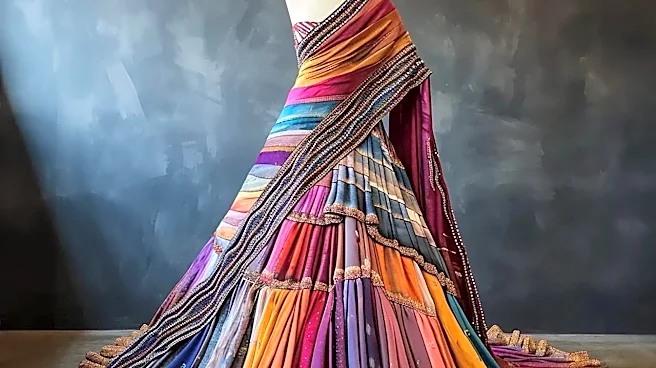


A dress isn't just a dress when it's built to challenge a building. On the grand staircases of museums, some red-carpet looks are designed not just for the body, but to engage in a silent, powerful dialogue with the architecture itself.
The Dress as Destination
The red carpet
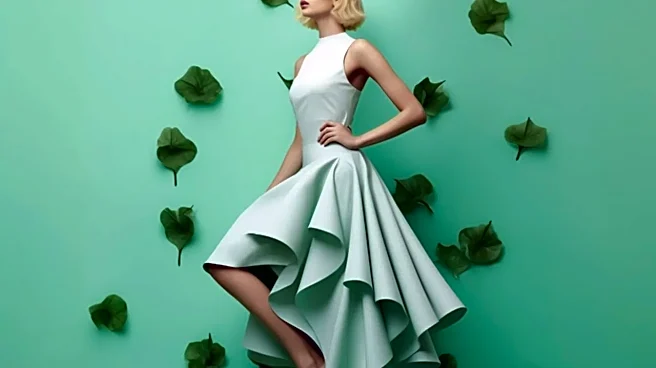
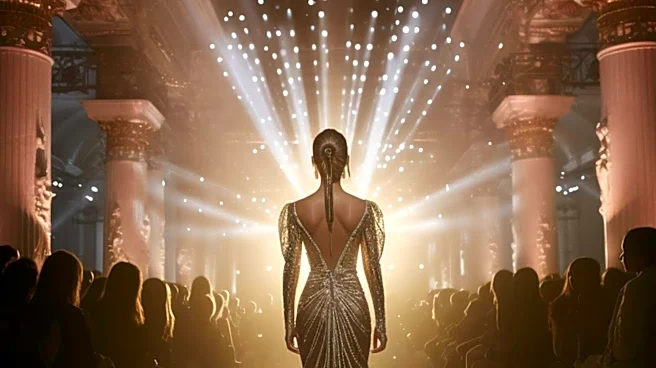
is no longer just a path; it's a stage. And on the most prestigious of those stages—the steps of museums like The Met or the Academy Museum of Motion Pictures—fashion is undergoing a fascinating transformation. We're seeing the rise of the 'architectural look', a garment so ambitious in scale, structure, and story that it seems designed to rival the very building it occupies. This isn't about simply looking good. It's about commanding space. Think of a gown with a train so expansive it covers an entire flight of marble stairs, or a silhouette so sculptural it could be mistaken for a modern art installation. These pieces aren't accessories to an event; they are the event, temporary installations of textile art that demand as much attention as the limestone columns and soaring atriums around them.
A Dialogue With Design
The most successful examples of this trend don't just occupy space; they converse with it. A masterful architectural look considers the venue's history, materials, and aesthetic. Perhaps the most celebrated recent instance is Blake Lively's 2022 Met Gala gown. The dress, designed by Versace, transformed on the red carpet from a bronze inspired by the Empire State Building to a sweeping teal, mirroring the oxidized patina of the Statue of Liberty. It was a piece of performance art that told a story directly linked to the host institution's American Wing. The gown's design didn't just compete with the museum; it paid homage to the art within and the city outside, creating a narrative that was impossible to ignore. It was a level of conceptual depth that turned a celebrity entrance into a cultural moment, proving that a dress can be a dissertation.
The Architect and the Couturier
Behind these creations are designers who think like architects. Couturiers such as Guo Pei, Iris van Herpen, and Thom Browne are known for treating fabric not as a drapery, but as a building material. Guo Pei's canary-yellow, fur-trimmed cape worn by Rihanna at the 2015 Met Gala is a legendary example; it required multiple attendants and consumed the entire staircase, becoming an iconic image of fashion as spectacle. Van Herpen uses 3D printing and unconventional materials to create dresses that look like kinetic sculptures, their delicate, complex forms echoing patterns found in nature and technology. These designers are obsessed with volume, structure, and the way a garment moves through and interacts with a three-dimensional environment. They are crafting wearable art that challenges the boundaries between fashion, sculpture, and architecture, forcing us to see clothing in a new context.
More Than a Moment, It's a Statement
So why is this happening? In an era saturated with images, the architectural dress is a power play. It guarantees an unforgettable, viral moment that cuts through the noise. For a celebrity, it asserts a level of seriousness and artistic ambition. It says, 'I am not just a guest in this cultural space; I am a contributor to it'. For a designer, it's the ultimate showcase of technical skill and creative vision, a portfolio piece that will be analyzed for years. Ultimately, this trend reflects a shift in how we view fame and cultural institutions. By wearing a look that competes with the museum itself, the celebrity and designer are claiming their own space in the art world, turning the red carpet from a mere entrance into a gallery of its own.