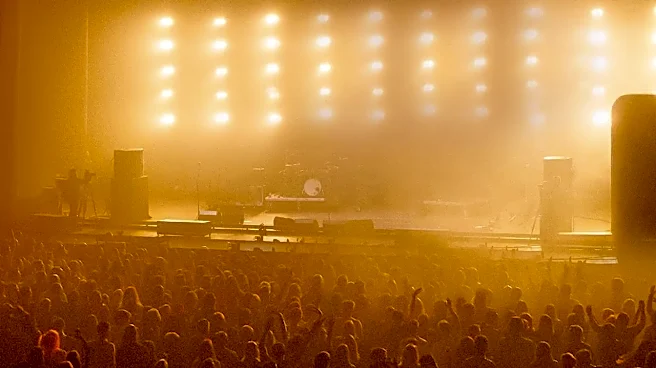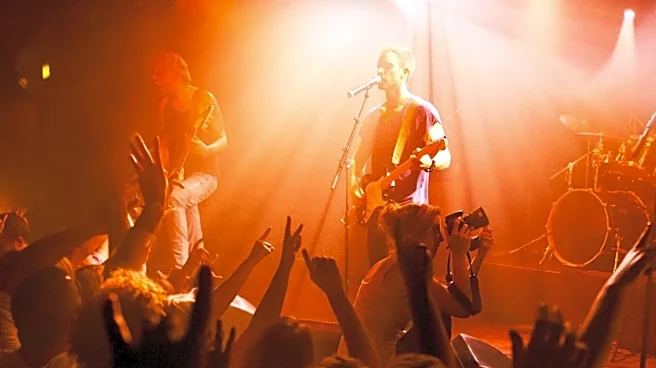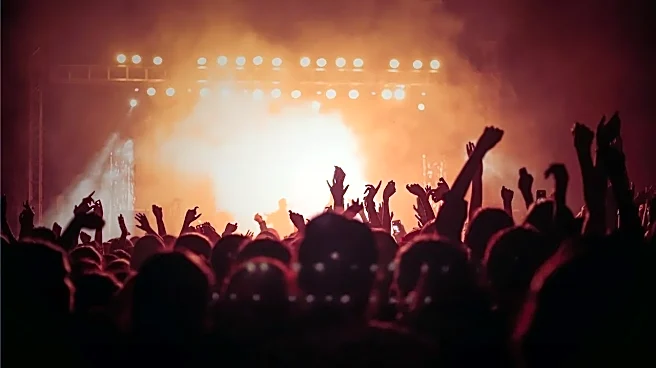

Picture it: tens of thousands of people packed into Zilker Park, a sensory overload of booming bass, dazzling lights, and cheering crowds. So why is it that in this sea of noise, the most unforgettable
moment often arrives in a whisper?
An Ocean of Sound
Austin City Limits Music Festival is a monument to joyful noise. Over two weekends, hundreds of thousands of fans navigate a sprawling campus of sound, bouncing between superstar rock anthems on one stage and earth-shaking EDM drops on another. The air is thick with competing basslines, the scent of food trucks, and the collective energy of a small city dedicated to celebration. The entire experience is designed for maximum stimulation. Artists are tasked with commanding the attention of massive crowds, often relying on explosive visuals, high-energy hits, and call-and-response tactics to connect across the vast field. In this environment, loudness feels like the currency of success. The bigger the drop, the louder the singalong, the more epic the moment—or so it would seem.
The Sudden, Sacred Hush
And yet, the moments that often etch themselves into festival lore are the quiet ones. It’s a phenomenon of contrast. When an artist dares to strip everything away—the bombast, the backing track, the spectacle—they create a vacuum. Into that space rushes a different kind of energy. The sudden hush that falls over a massive crowd is a powerful force. It’s a collective intake of breath, a shared moment of focus that transforms thousands of individuals into a single, attentive entity. Psychologists call the feeling of being swept up in a group's shared emotion "collective effervescence." It’s a feeling that something special, even sacred, is happening. In the middle of a loud, chaotic festival, a moment of quiet vulnerability feels exactly like that: sacred.
The Artist's Ultimate Trust Fall
Choosing to play a quiet, acoustic, or sparsely arranged song in a headline festival slot is a profound act of trust. An artist is betting that the audience will follow them into a more intimate space. Consider artists like Phoebe Bridgers or Billie Eilish, both of whom have created iconic ACL moments with their softer material. When Eilish commanded the crowd to put their phones down and just be present for the haunting ballad "when the party's over," it wasn't just a request; it was an invitation to co-create a memory. Similarly, when Bridgers steps to the edge of the stage, her voice barely above a whisper, she’s trusting that the crowd will provide the silence needed for the song to land. It’s a high-wire act. If the audience isn't with them, the moment deflates. But when it works, it forges an unforgettable bond between the artist and every person listening.
A Choir of Thousands
The magic of the quiet festival moment is a two-way street. The crowd isn't just a passive observer; it’s an active participant. When thousands of people stop talking, lower their phones, and listen intently, they are making a choice. When they softly sing along to a poignant lyric, their voices merging into a massive, gentle choir, they become part of the performance. This shared experience fosters a deep sense of connection and community. Neurologically, music can synchronize our bodies, aligning heart rates and triggering the release of dopamine. In these quiet moments, you can feel that synchronization happen in real-time. You’re no longer a stranger in a crowd but part of something larger than yourself, sharing a singular, unrepeatable experience. It’s a reminder that we all crave connection, and sometimes, the most profound way to find it is by listening together in the quiet.