





More Than Just a Sketch
Every year, the Cannes Film Festival delivers a masterclass in red carpet spectacle. We see the final product: a celebrity in a breathtaking gown by Dior, Schiaparelli, or Chanel, posing for a sea of photographers. We credit the creative director—the famous name on the label—for the vision. But a brilliant sketch is just a two-dimensional dream. Turning that dream into a three-dimensional reality that can withstand the world’s most scrutinized staircase is the work of a hidden army of artisans, and at the heart of that army is the pattern cutter, or *modéliste*.
The Architect of Fabric
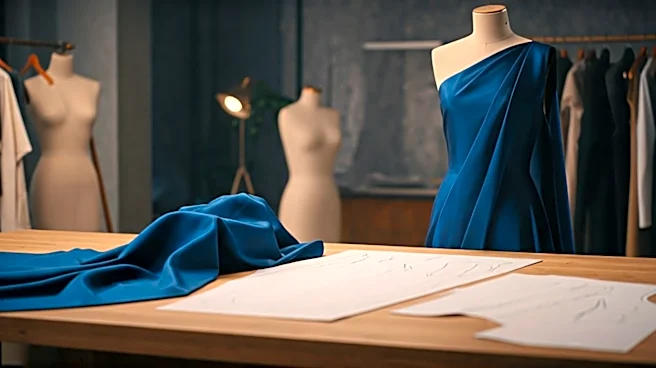
Don’t mistake a pattern cutter for a simple seamstress. In the world of haute couture, they are engineers and sculptors who work with fabric. When a designer hands over a drawing, the *modéliste*
is tasked with translating that artistic vision into a series of precise, interlocking paper shapes. This is where the magic, and the math, happens. They must understand how a certain silk will fall, how velvet will catch the light, and how to create structure where there is none. A single millimeter of difference in a pattern piece can be the difference between a gown that floats and one that pulls awkwardly. This role is especially critical for the complex, avant-garde pieces that often debut at Cannes. Think of Bella Hadid's iconic Schiaparelli look with the golden lungs; that wasn't just sewn, it was engineered with a pattern of architectural precision.
The Life of a Toile
Before a single thread is stitched into priceless silk, the pattern is used to create a *toile*—a full-scale prototype of the gown, typically made from inexpensive cotton muslin. This is the pattern cutter's laboratory. Working on a dress form set to the client's exact measurements, the *première d'atelier* (head of the workshop) and the pattern cutter will pin, snip, and adjust the toile, sometimes for days or weeks. Is the shoulder line correct? Does the waist seam create the desired curve? How does the fabric move when the wearer walks? The toile is where problems are solved and perfection is painstakingly pursued. Multiple toiles might be created for a single gown until the pattern is deemed absolutely flawless. Only then is it laid upon the final, precious fabric.
The Cannes Gauntlet
A dress for Cannes isn’t just any dress. It has a job to do. It must look immaculate after being flown across the globe. It needs to be stunning not just head-on, but from every conceivable angle as the celebrity twirls for cameras. Most importantly, it has to conquer the *Montée des Marches*—the 24 red-carpeted steps leading up to the Palais des Festivals. A pattern cutter for a Cannes gown is thinking about physics: how will the hem of this train glide up the stairs without catching? How does this bodice stay perfectly in place during a ten-minute walk under hot lights? The precision isn't just for beauty; it's for function under extreme pressure. The seeming effortlessness of a star gliding up those steps is a direct result of the hours of meticulous, hidden effort from the pattern cutter who anticipated every potential wardrobe disaster and engineered it out of existence.