




In the world of sharp dressing, millimeters matter. But while most focus on jacket shoulders or trouser length, a crucial detail is often missed: the top of the shoe. This one element, the vamp, quietly dictates how your trousers fall.
First, Let’s Talk Trouser Break
Before we get to
the shoe, we have to understand what it’s affecting. The 'trouser break' is the small, horizontal fold or crease that forms at the front of your pant leg where it meets your shoe. It’s a fundamental part of tailoring that signals intention. There are generally four types. A 'no break' style is modern and sharp, where the hem just skims the top of the shoe with no fold. A 'slight' or 'quarter' break has a minimal kiss of fabric against the shoe, creating a very subtle ripple. The 'half break' is the versatile workhorse, with a single, noticeable but controlled fold. Finally, the 'full break' is a more traditional look with a deeper crease, best suited for wider-leg trousers. The goal isn't to pick one as 'correct' but to understand which one you're aiming for, because your choice of footwear will either help or hinder it.
What Exactly Is a Shoe's Vamp?
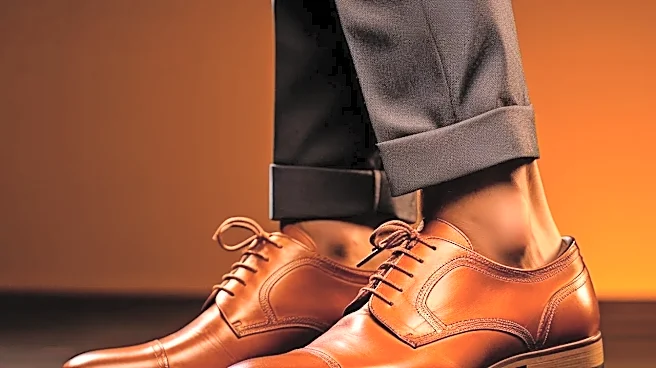
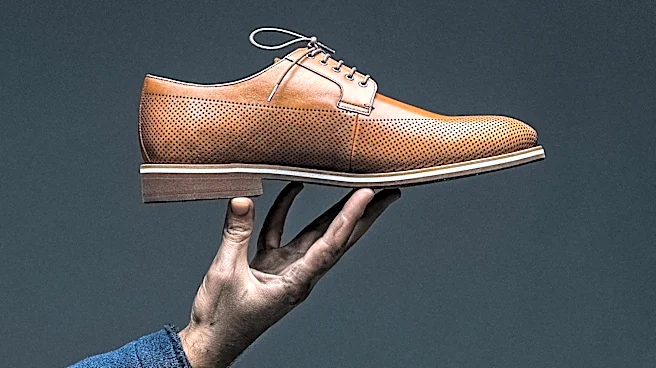
Now for the main event. The 'vamp' is the section of a shoe's upper that covers the top of your foot, from the toe up towards the ankle. Think of it as the 'face' of the shoe. Its height is the critical factor here. A 'high-vamp' shoe covers more of the foot. Classic lace-up dress shoes like Oxfords or Derbys are prime examples; the lacing system brings the material high up the instep. A 'low-vamp' shoe, on the other hand, covers only the toes and a small part of the foot. Loafers—whether penny, tassel, or horsebit—are the most common example in formalwear. They leave much of the top of the foot exposed. This distinction seems minor, but it creates a completely different foundation for your trouser hem to rest upon.
How the Vamp Dictates the Break
Here’s where the magic happens. A high-vamp shoe, like an Oxford, provides a taller, more supportive 'shelf' for your trouser hem. As the fabric of your trousers meets the shoe, it rests against a smooth, structured surface that extends up the foot. This allows for a clean, elegant break—especially a slight or half break—because the trouser leg is supported and drapes gracefully. The transition is seamless. Conversely, a low-vamp shoe like a loafer presents a problem for longer trousers. Because the shoe's profile is so low, there's nothing to support the trouser leg. If the trousers are cut for a half or full break, the fabric has nowhere to go but down, collapsing into an awkward, messy pool around the ankle. A loafer simply cannot tolerate a full break; the fabric just puddles. This is why loafers often look best with trousers that have little to no break, or are even slightly cropped.
Putting It All Together: A Practical Guide
So how do you use this knowledge? It’s about creating harmony between your pants and shoes. If your goal is a classic,
versatile look for the office with tailored wool trousers,
you should be reaching for a highndamp shoe.
An Oxford or a Derby will give your trousers with a slight or half break
the clean line they need.
This combination is timeless and projects a sense of being put-
together.
If you love
the rakish,
modern look of loafers with a suit or formal trousers,
you must adjust your pant length accordingly.
Have your trousers hemmed for a 'no break'
or even a 'negative break'
finish,
where they sit just above
the shoe.
This creates a sharp,
intentional silhouette and properly frames
the loafer.
Trying to wear
the same trousers interchangeably between your Oxfords and your loafers will likely result in one of
the pairings looking 'off'.
The break is a relationship between a specific trouser and a specific shoe style,
not a fixed measurement.