




Authenticity Is More Than Accuracy
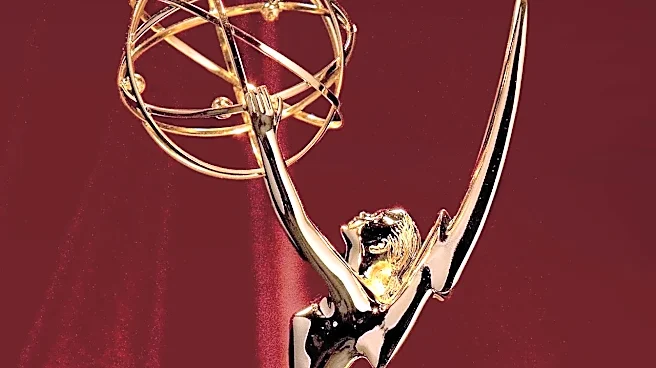
When the Creative Arts Emmys honor a show for Outstanding Production Design, they’re rewarding more than just historical or factual accuracy. They are celebrating authenticity, which is a far deeper concept. Authenticity is about creating a world that
feels emotionally and thematically true to the characters and the story. It’s the difference between a museum-perfect room and a space that feels like someone just stepped out of it. Production designers and their teams of set decorators and prop masters are tasked with building this believability from the ground up, ensuring every coffee cup, worn-out armchair, and piece of futuristic tech serves the narrative. This invisible layer of storytelling is what makes viewers forget they’re watching a show and instead feel like they’re peering into another reality.
The Character in the Clutter
Look no further than the frenetic kitchens of The Bear for a masterclass in using props to define character. The show, a perennial Emmy contender for its design, uses its environment to reflect the protagonists' inner turmoil. The claustrophobic, yet meticulously organized, chaos of the kitchen is a direct reflection of Carmy's own mind. Every Cambro container, every piece of well-worn kitchen equipment, and every scuff on the wall tells a story of pressure, history, and the quest for perfection. The production design team reportedly worked to embed practical lighting within the sets, making the kitchen feel functional and constantly in use, which enhances the realism for both the actors and the audience. The props aren't just background dressing; they are active participants in the storytelling, showing us who the characters are without a single line of dialogue.
Building Entire Worlds, One Prop at a Time
For period or fantasy shows, the challenge is even greater. Shows like Shōgun or Fallout can’t just go to a store; they have to create entire universes from scratch. The production team on Shōgun went to extraordinary lengths, employing a Japanese crew with deep experience in historical dramas to ensure every detail, from the hilt of a sword to the material of a scroll, was authentic to 1600s Japan. This involved not just researching, but often recreating, the props and architecture of the era. Similarly, the team behind Fallout had the unique task of translating a beloved video game’s aesthetic into a tangible, live-action world. This meant fabricating everything from the iconic Pip-Boy wrist computers to the distinctive shape of Nuka-Cola bottles, all while making them look believably weathered and scavenged in a post-apocalyptic society.
The Power of the 'Hero Prop'
In the language of production design, a “hero prop” is any object that is handled by an actor or shown in a close-up. These props have to be perfect. While a hundred background swords might be simple casts, the one a main character draws from its sheath must be intricately detailed, historically correct, and able to withstand the scrutiny of a high-definition camera. In Shōgun, the Christian cross worn by Lady Mariko is more than just a necklace; it’s a hero prop that represents her faith, her past, and her internal conflict, requiring it to be visually and historically resonant. For the Emmys, the successful execution of these crucial, story-defining objects is a key indicator of a production design team that is operating at the highest level, seamlessly blending artistry with narrative function.