



An Architecture of Energy
The defining pop sound of the early 2010s was a direct descendant of electronic dance music (EDM). Producers like David Guetta, Calvin Harris, and Dr. Luke perfected a formula that took over the airwaves: the build-and-drop. Songs like Rihanna’s “We Found
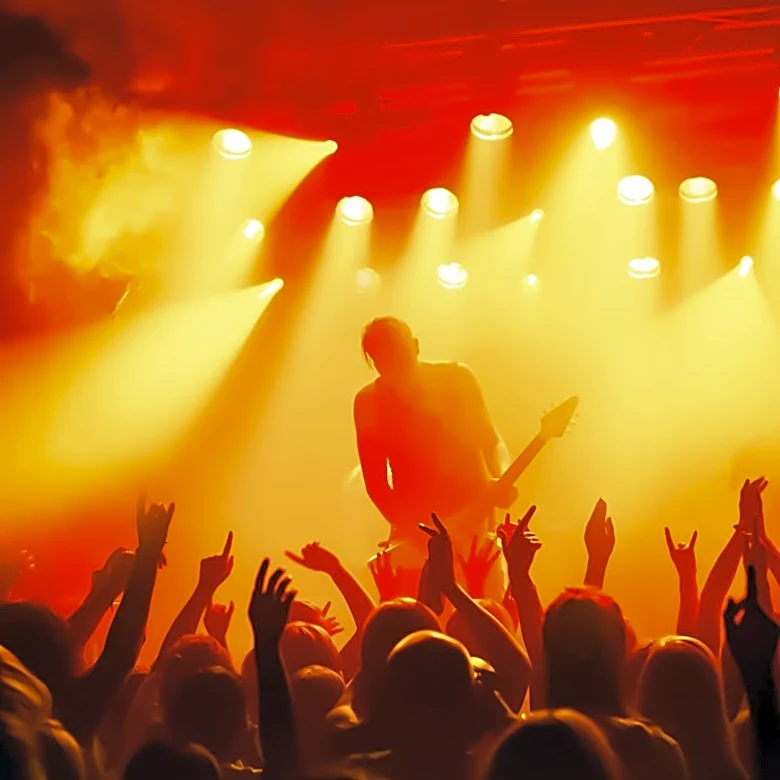
Love” or Kesha’s “Tik Tok” weren't just verses and choruses; they were journeys of mounting tension released in an explosion of synths and drums. This structure was practically designed for a festival setting. With short set times, artists needed every song to be an event. There was no time for slow burns or subtle storytelling. The EDM-pop formula delivered a guaranteed jolt of adrenaline every three-and-a-half minutes, keeping the massive stadium crowds engaged and energized from one superstar act to the next. The songs were self-contained fireworks displays, perfectly suited for a rapid-fire showcase of chart-toppers.
Engineered for Every Speaker
The iHeartRadio Music Festival is, at its core, a live commercial for radio itself. It’s an event designed to be broadcast across hundreds of stations and streamed online, meaning the music has to sound good everywhere—from a car stereo to a fan’s earbuds to the giant speakers at the T-Mobile Arena. The pop hits of the 2010s were produced for exactly this reality. This was the era of the “loudness wars,” where songs were mixed and mastered to be as loud and compressed as possible, ensuring they cut through the noise on any platform. The sound was dense, with layers of synths and heavily processed vocals creating a wall of sound that felt immense. This sonic approach meant that a song like Katy Perry's “Roar” or Lady Gaga's “The Edge of Glory” lost none of its power when transitioning from the live stage to the radio broadcast, making for a seamless marketing loop.
Lyrics Everyone Can Shout Along To
What do you do when you have a stadium full of fans who love dozens of different artists? You give them something they can all sing along to, instantly. The lyrical content of 2010s pop anthems was overwhelmingly universal, simple, and aspirational. Themes of partying (“Party Rock Anthem”), self-empowerment (“Firework”), and living in the moment (“Give Me Everything”) dominated. Studies have shown that pop lyrics grew simpler and more repetitive during this period, which made them incredibly effective for mass consumption. There was little room for nuance or complex narratives. Instead, the lyrics were bold, declarative statements that were easy to remember and even easier to shout back at the stage. This created the kind of massive, unifying moments that look great on a TV broadcast and feel electric in a crowd of thousands.
A Perfect Symbiosis
Ultimately, the iHeartRadio Music Festival and 2010s pop anthems were a perfect commercial and artistic match. The festival needed a constant supply of undeniable, high-impact hits to justify its star-studded, multi-genre lineup. It wasn't about deep cuts; it was about showcasing the biggest songs of the year in a format built for short attention spans and shareable moments. The pop music of the era, heavily influenced by the high-energy, low-complexity rush of EDM, provided exactly that. Artists could walk on stage, deliver four of their biggest hits, and create a 20-minute highlight reel of their career. For a festival designed to celebrate the power of mainstream radio hits, there was no better soundtrack than the loud, unapologetic, and brilliantly simple pop anthems of the 2010s.