






The Anatomy of a Play-Action
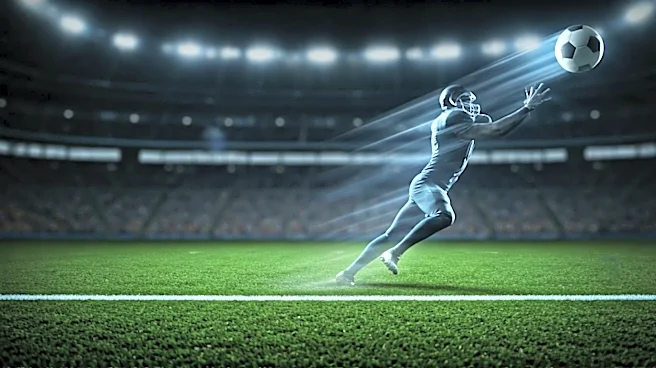
In American football, the play-action pass is a masterclass in misdirection. The entire offensive line sells a run play. The running back charges forward, arms ready. The quarterback turns his back to the defense, extends the ball, and for a split second,
the universe of the game is about one thing: stopping the run. Linebackers crash the line. Safeties creep up. And in that moment of collective belief in a lie, the quarterback pulls the ball back, pivots, and finds a receiver streaking into the space vacated by the duped defenders. It isn't just a trick play; it’s a foundational element of offensive strategy that preys on defensive instinct and discipline. The goal is to make the defense react to what they *think* is happening, not what actually is.
Soccer's Sleight of Foot
Now, translate that to the soccer pitch. The ball isn't in a player's hands, but at their feet. The deception, however, is identical in spirit. The soccer equivalent of a play-action is the feinted pass or the dummied through-ball. A midfielder, like Kevin De Bruyne or Lionel Messi, will be dribbling toward the opponent's goal, head up, scanning. They will shape their body to play a simple, obvious pass to a teammate on the wing. Their hips turn, their plant foot is set, and their kicking leg swings back. The entire defense shifts, anticipating the sideways ball. They move to intercept the pass they’ve been sold. But at the last possible microsecond, the midfielder pulls their foot over the ball, lets it roll past them (a “dummy”), or uses the outside of their boot to slide a pass in the complete opposite direction, straight through the heart of the now-unbalanced defense. A striker, who was in on the ruse all along, is there to receive it in acres of space.
Selling the Lie, Freezing the Defense
The magic of both plays lies in their ability to manipulate time and space by telling a convincing story. The play-action freezes linebackers for a critical half-second. That’s all a tight end needs to slip behind them. In soccer, the feinted pass does the same. It forces a defender to take one false step to their left, which is more than enough time for a forward to dart into the space on their right. In both scenarios, the offensive player isn’t just beating the defender with speed or strength; they are beating them with intellect. They are exploiting the defender's training, turning their reactive instincts against them. The defender isn't being lazy or foolish; they are being punished for correctly reading the *wrong* information. This is why the sell is so important. A lazy play-action fake doesn’t fool anyone. A telegraphed feint in soccer is just a bad touch. The execution has to be perfect.
The Master at Work
Watch any highlight reel of a world-class attacking midfielder and you will see this principle in action. A classic example is the no-look pass, perfected by players like the Brazilian legend Ronaldinho and now a staple for many creative playmakers. By looking one way while passing another, the player essentially forces the entire defense to focus on a decoy. They are passing not just the ball, but a piece of false information. When a player like Messi drops his shoulder to go left, the entire defense leans with him. When he then cuts back and slides a pass through the gap they just created, it’s the exact same tactical victory as a quarterback finding his receiver over the middle after selling a fake toss to the outside. It’s a checkmate move, turning the geometry of the field into a weapon.