


The Echoes of an Epic Poet
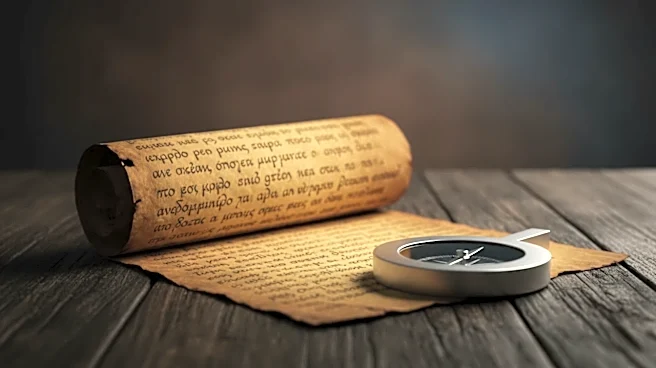
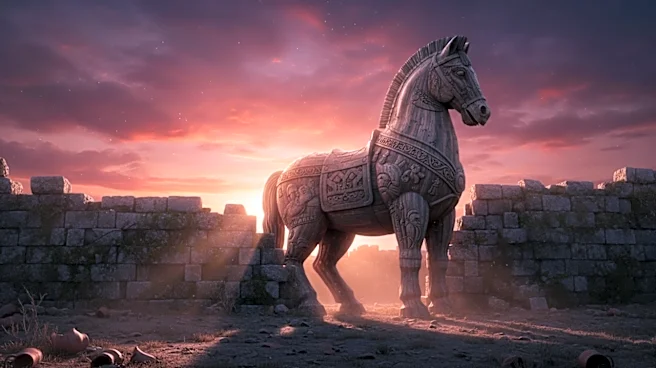
First, a quick refresher. In epic poems like The Iliad and The Odyssey, which were originally passed down through oral tradition, the poet Homer used repeated descriptive phrases called epithets. Think of "swift-footed Achilles," "rosy-fingered Dawn,"
or the "wine-dark sea." These weren't just poetic flourishes; they were functional. In a sprawling story with dozens of characters and no pages to flip back to, these recurring tags helped the audience keep track of who was who and reinforced their essential qualities. The repetition was a navigational tool, a mnemonic device that grounded the listener in a complex world and made its key elements instantly recognizable and memorable.
Nolan's Visual Epithets
Now, jump forward a few thousand years to a Christopher Nolan film. You're dropped into a labyrinthine plot, often unfolding across multiple timelines or layers of reality. The narratives are dense, the concepts abstract—time, memory, identity—and the experience can be disorienting. This is where Nolan, perhaps unconsciously, deploys a similar strategy to Homer. Instead of verbal tags, he uses recurring visual and auditory motifs as anchors. These motifs act as a form of modern-day epithet, giving the audience familiar signposts to grasp onto amidst the narrative chaos. They aren't just callbacks; they are the fundamental building blocks of his cinematic language, shaping our understanding of character and theme.
Objects of Obsession
Nolan's most recognizable form of repetition comes through physical objects. These are his most direct visual epithets. In Inception, the spinning top totem is more than a prop; it’s a constant, physical manifestation of Cobb’s struggle with reality. We see it again and again, and each time, it carries the entire weight of his existential crisis. The same is true for Leonard's Polaroids in Memento, which serve as fragmented, repeating clues to a past he can’t hold onto, or the two-headed coin in The Dark Knight, which becomes a visual shorthand for Harvey Dent’s descent into moral duality. Even the jar of marbles in Oppenheimer acts as a chilling, recurring visualization of an abstract countdown to catastrophe. Each object is an epithet for a character's core obsession.
The Architecture of a Mind
Beyond simple objects, Nolan expands this repetition to grander concepts and structures. His films are filled with visual paradoxes and recurring architectural ideas: mazes, folded cityscapes, and impossible staircases. The hallway that rotates in Inception or the tesseract that visualizes five-dimensional space in Interstellar are not one-off spectacles. They are visual arguments, repeated and explored from different angles to make intangible ideas about physics and consciousness feel tangible. Just as Homer would repeatedly describe a hero's armor to signify their role in battle, Nolan repeatedly shows us these impossible spaces to signify his characters' struggles against the limits of reality and perception.
The Man in the Suit
Finally, the repetition extends to character archetypes. Nolan's protagonists are often cut from the same cloth: sharp-suited, obsessive men haunted by a dead wife and a singular, all-consuming idea. From Cobb in Inception to Leonard in Memento, and even Bruce Wayne, there’s a recurring template. This isn’t lazy filmmaking; it’s the creation of a consistent archetype. This “Nolan Protagonist” is an epithet in itself. When we meet one, we are immediately attuned to a specific set of themes—guilt, obsession, loneliness, and a reality distorted by subjective experience. The repetition of the character type primes the audience for the specific psychological and philosophical territory the film is about to explore.