



The Incredible Shrinking Garment
One of the most immediate clues a waistcoat offers is its length and cut. When King Charles II first popularized the garment in England in 1666, it was a long, coat-like vest, sometimes reaching the knee. Throughout the 18th century, these long, often
elaborately embroidered waistcoats were a staple for the aristocracy, worn over breeches and under a long coat. But as the 1700s progressed, a significant change occurred: the waistcoat began to shrink. By the 1770s, it was noticeably shorter, ending around the waist. This wasn’t just a whim. It reflected a total shift in the male silhouette, moving from a full-skirted, curvaceous style to a more slender, vertical line that paved the way for the 19th-century suit. The front edges, which were once straight, started tapering away to expose more of the leg, signaling a move towards greater activity and a less sedentary, courtly lifestyle.
Fabric as a Social Barometer
If the cut of a waistcoat tells you 'when', the fabric often tells you 'who'. In the 18th century, a man of status would sport a waistcoat of vibrantly colored silk, velvet, or rich brocade, often covered in intricate floral embroidery using metallic threads. These were displays of immense wealth and taste, with the waistcoat frequently being the most decorative and expensive part of an entire outfit. However, the turn of the 19th century, marked by revolutions and the rise of a professional middle class, brought about what has been called 'The Great Male Renunciation'. Flashy, aristocratic opulence fell out of favor. Men’s fashion became more sober and uniform. The waistcoat transitioned from showy silks to more subdued and practical fabrics like wool. While it might still be the most colorful part of a man's attire, the palette became darker, and patterns shifted to checks and tartans, especially for daywear.
The Devil in the Details
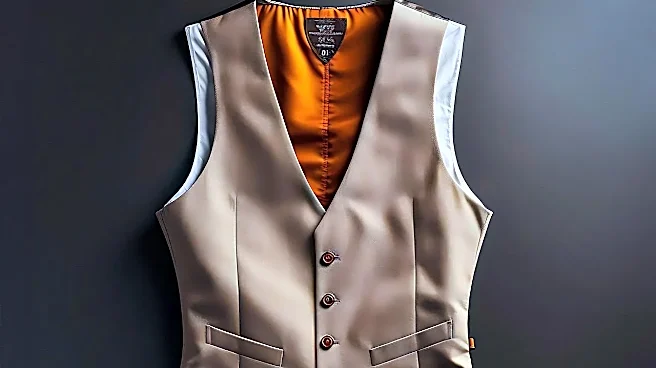
Beyond cut and fabric, tiny details can pinpoint a time period with surprising accuracy. In the early 19th century, for instance, it became fashionable to wear two waistcoats at once, so the top one would be left open to show the one beneath. The style of collar is another giveaway. High, standing collars were common at the start of the 1800s, often matching the coat worn over them. By the 1830s, shawl collars became popular. The shape of the bottom edge also evolved. A straight-cut bottom is typical of the early 1800s, but by the mid-1820s, waistcoats often featured pointed fronts, a style that has remained a classic feature. Even the number of buttons and how they were fastened could change year by year.
That Unbuttoned Bottom Button
Perhaps the most famous piece of waistcoat lore revolves around the bottom button. The enduring tradition is to always leave it unfastened. While there are many theories, the most popular one credits a portly King Edward VII in the early 1900s. The story goes that he left his bottom button undone for comfort, and his court, in a show of respect, followed suit, turning a practical adjustment into a lasting fashion rule. Another practical theory suggests the practice originated with horse riding, as leaving the bottom button undone prevented the waistcoat from bunching up when seated on a horse. Whatever its origin, the convention became so ingrained that many modern waistcoats are specifically cut in a way that makes fastening the bottom button awkward, causing the garment to pull incorrectly.