








Start with the Right Luggage
Your entire strategy starts with a bag that meets airline and stadium requirements. For air travel, most major U.S. carriers like Delta, United, and American Airlines cap carry-on size at 22 x 14 x 9 inches, including wheels and handles. While enforcement
used to be inconsistent, many airlines now use automated scanners at the gate, leaving no room for error. A soft-sided bag offers a little more flexibility for fitting into tight overhead bins, but a hard-shell case provides better protection for souvenirs you pick up along the way. Remember, this bag will likely stay at your hotel or in a luggage storage service during the match, as it will be too large for stadium entry. Also, be mindful of weight; while most U.S. domestic carriers don't enforce strict weight limits for carry-ons, international airlines often do, sometimes capping bags at 15-22 pounds.
Master the 'Personal Item' and Stadium Bag
The secret weapon for a soccer traveler is a dual-purpose personal item. Most airlines allow one personal item (like a backpack or large tote) that fits under the seat in front of you, typically around 18 x 14 x 8 inches. This bag holds your in-flight essentials: electronics, medications, and a change of clothes. Inside this personal item, you should pack your stadium-approved bag. All 2026 FIFA World Cup venues in the U.S., Canada, and Mexico enforce a strict clear bag policy. Each fan is permitted one clear bag no larger than 12 x 6 x 12 inches. You are also allowed a small, non-clear clutch or wallet, roughly 4.5 x 6.5 inches. On game day, you'll leave your larger backpack at the hotel and head to the stadium with just the clear bag containing your essentials.
Pack a Versatile Wardrobe
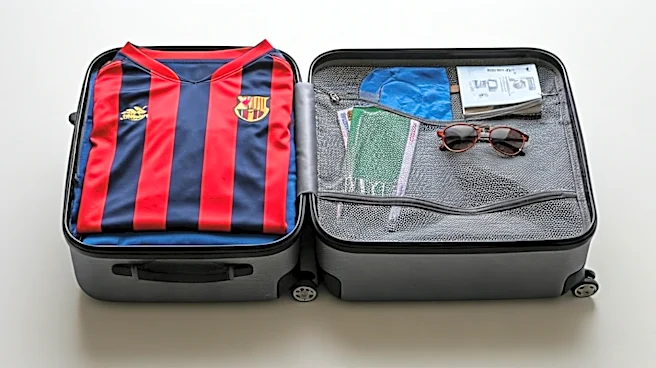
A multi-city tournament means variable weather. A match in Miami will feel very different from one in Seattle or Toronto. The key is layering. Pack lightweight clothing that can be mixed and matched. Think moisture-wicking t-shirts, a long-sleeve shirt, a fleece or hoodie, and a packable waterproof jacket. Pack one pair of comfortable walking shoes, as you'll be doing plenty of it. For your team gear, bring your favorite jersey, but also consider a more neutral team-branded hat or scarf that can be worn with any outfit. Pack more socks and underwear than you think you need—they take up little space and are a lifesaver after a long, hot day or an unexpected rain shower.
Power and Connectivity Essentials
Between digital tickets, navigation, photos, and staying in touch, your phone is your most critical tool. A dead battery is not an option. Pack at least one portable power bank, ensuring it complies with airline regulations (spare lithium batteries must be in your carry-on, not checked luggage). Most power banks under 100 watt-hours are fine for cabin travel. Bring a wall charger with multiple USB ports to charge all your devices at the hotel overnight. If you're an international visitor to the U.S., a universal travel adapter is non-negotiable. Finally, a good pair of noise-canceling headphones is a must for flights, train rides, and finding a moment of calm amidst the excitement.
Toiletries and In-Flight Comfort
All liquids, gels, and aerosols in your carry-on must follow the TSA's 3-1-1 rule: containers must be 3.4 ounces (100ml) or less, and all must fit in a single, clear, quart-sized bag. To save space in your liquids bag, consider solid toiletries like shampoo bars, conditioner bars, and solid cologne. Don't forget sunscreen—you'll be outside more than you think—and a small first-aid kit with basics like pain relievers, blister bandages, and any personal medications. For the journey itself, a neck pillow, eye mask, and earplugs can make a world of difference on a red-eye flight to the next host city.
Don't Forget These Game-Changers
A few small items can make a huge difference. Pack a reusable, collapsible water bottle (make sure it's empty when going through airport security). While most stadiums won't allow you to bring it in, you can use it daily to stay hydrated while exploring the host cities. Also bring a printed copy of your tickets, hotel confirmations, and key contact numbers; don't rely solely on your phone, as service can be spotty in crowded areas and batteries can die. Finally, bring some cash. While cards are widely accepted, some smaller vendors or parking lots near stadiums might be cash-only.