
The Power of Contrast
The magic lies in juxtaposition. When you place a traditionally masculine garment next to softer, more fluid elements, it doesn’t cancel out femininity; it spotlights it. A crisp, oversized blazer makes the slip dress underneath seem more delicate. A structured
waistcoat worn as a top emphasizes the curve of the waist and shoulders. This isn't about dressing 'like a man', but about using the perceived rigidity of menswear as a frame to highlight what is inherently female. The hard lines of a tailored jacket or the simple geometry of a tie create a backdrop against which softness, from the drape of a satin skirt to the curve of a neckline, becomes more pronounced and intentional.
From Rebellion to Runway Staple
Borrowing from the boys has a rich history, evolving from a radical act to a runway norm. Early pioneers like Coco Chanel and Katharine Hepburn adopted menswear in the early 20th century not just for comfort, but as a statement of liberation. For decades, putting on trousers or a tuxedo jacket was an act of defiance against restrictive social codes. The look was further popularized by Diane Keaton’s iconic, layered ensembles in 'Annie Hall', which brought vests, hats, and neckties into the mainstream consciousness. Today, that subversive energy has transformed into a sophisticated language of personal style. Designers have long since realized that incorporating menswear elements into women's collections is big business, with brands like Ralph Lauren and Giorgio Armani building empires on this very idea.
The Modern Alchemists: Waistcoats and Ties
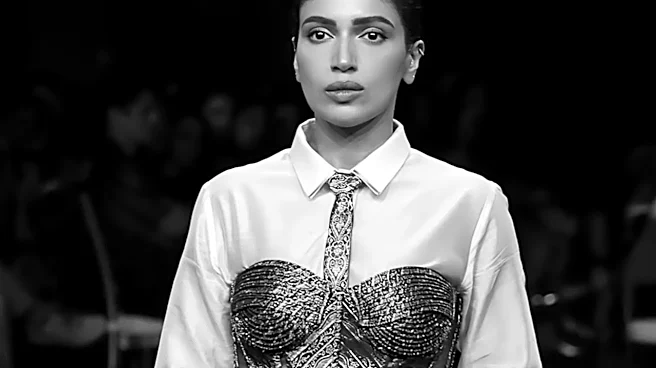
Two pieces in particular are currently having a major moment: the waistcoat and the necktie. Once the staid uniform of the three-piece suit, the waistcoat is now a standalone star. Worn on its own as a top with wide-leg trousers or paired with jeans, it offers structure without the formality of a full blazer. It has become a go-to for creating a look that feels polished yet effortless. Similarly, the tie is being reclaimed as a purely stylistic accessory, detached from its corporate and school uniform past. Seen on runways and street-style stars, it’s now styled loosely with an open collar, paired with pleated skirts, or even worn over a dress, serving as an unexpected focal point that is both playful and powerful.
It’s All in the Styling
Ultimately, the transformation from masculine to feminine is achieved through styling. It’s the subtle details that do the heavy lifting. Rolling up the sleeves of an oversized button-down shirt to reveal the wrists, leaving a tie undone, or pairing heavy brogues with a floaty dress are all choices that shift the context of the garment. The key is to strike a balance, mixing traditionally masculine fabrics like tweed or pinstripe with feminine ones like silk and lace. It’s not about wearing men’s clothing; it’s about taking menswear-inspired pieces and integrating them into a wardrobe in a way that feels authentic and personal. The result is a look that feels confident, considered, and anything but one-dimensional.