






The Three-Act Structure, Demystified
Before we board the train, let's talk about the tracks. Nearly every story you love, from ancient myths to Hollywood blockbusters, follows a surprisingly simple blueprint: the three-act structure. Think of it as a story's skeleton. Act I is the 'Setup,'
where we meet the hero and their world, and something happens to kick off the adventure. Act II is the 'Confrontation,' the longest part of the journey, where the hero faces a series of challenges and grows. Act III is the 'Resolution,' where the hero faces their final test and returns home, changed. It’s the beginning, the middle, and the end. This structure isn't a rigid formula but a powerful framework that creates a satisfying emotional journey.
Act I: The Call to Adventure
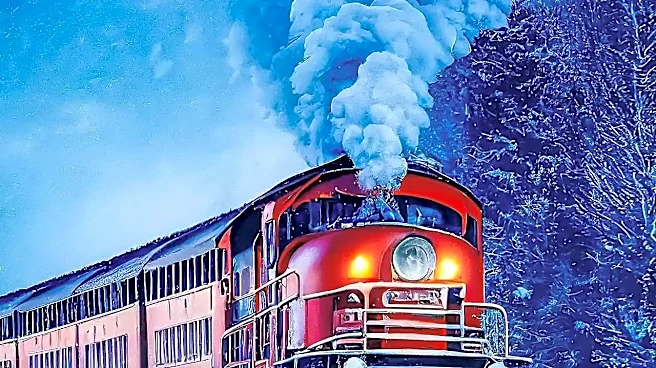
In 'The Polar Express,' Act I is all about doubt and invitation. We meet Hero Boy, who is on the verge of disbelief in Santa Claus. This is his ordinary world. The 'inciting incident' that shatters this world is the deafening roar of a magical steam engine appearing in his front yard. The Conductor (Tom Hanks) offers him a choice: get on the train or stay behind. His hesitation and eventual decision to climb aboard is the 'first plot point'—the moment he commits to the journey. He has stepped through the first door and can't go back. This act establishes his internal conflict (belief vs. doubt) and his external goal (going to the North Pole).
Act II: The Perilous Journey North
Act II, the 'Confrontation,' is where the real adventure unfolds and the protagonist is tested. On the Polar Express, this isn't just a smooth ride. The stakes are constantly raised through a series of escalating challenges. Hero Boy meets new characters who test and help him, like the kind Hero Girl and the lonely Billy. The journey includes a frantic chase to return a lost ticket, a high-speed runaway train car sequence, and a nerve-wracking crossing over a frozen lake. These aren't just random events; they force the boy to be brave, take initiative, and connect with others. The middle of the film is packed with rising action that pushes him far outside his comfort zone, confronting his fears and solidifying his new friendships on the way to the North Pole.
Act III: Resolution and a Reindeer's Bell
Act III is the payoff. The train arrives at the North Pole, but the journey isn't over. After a chaotic detour through Santa's workshop, Hero Boy finds himself at the center of it all. The 'climax' occurs when Santa chooses him to receive the first gift of Christmas. Faced with this incredible moment, he doesn't ask for a toy; he asks for a single silver bell from a reindeer's harness—a physical symbol of belief. Though he loses it, the bell reappears under his tree on Christmas morning, a gift from Santa. In the 'resolution,' only he and his sister can hear its beautiful sound, confirming that he has changed. His family might not understand, but his internal conflict is resolved: he believes. The story ends with a new, magical normal.
Now, Test Your Holiday Queue
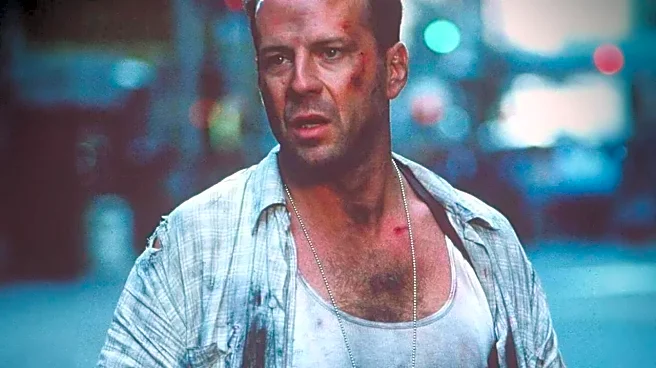
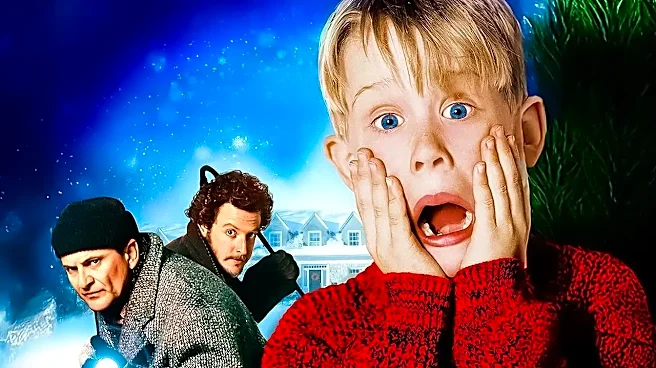
This structure is everywhere. Try it on 'Home Alone.' Act I: Kevin is accidentally left behind (inciting incident) and must learn to fend for himself. Act II: He enjoys his freedom until the Wet Bandits target his house, forcing him to confront them with a series of traps. Act III: The final showdown, the intervention of his neighbor Marley, and his reunion with his family. Or consider the endlessly debated 'Die Hard.' Act I: John McClane arrives at Nakatomi Plaza for a Christmas party. Terrorists take over. Act II: McClane wages a one-man war, facing escalating threats. Act III: He confronts Hans Gruber, saves his wife, and walks out into the morning light. Look at your own holiday favorites. Can you spot the inciting incident? The rising action and midpoint turn? The final climax and resolution? It's a fun game that adds a new layer of appreciation to the films you already know by heart.