






A History of Comic Book Chaos
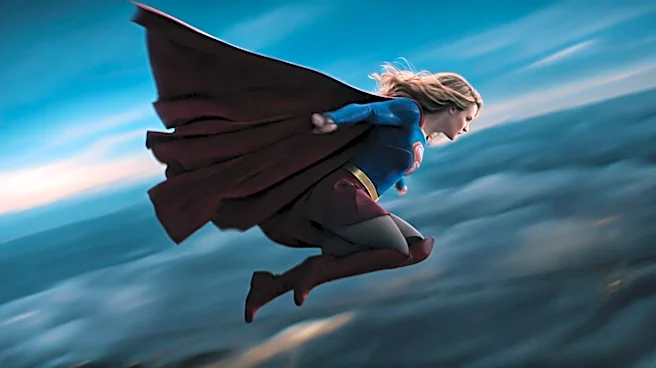
To the casual moviegoer, Supergirl is simple: she’s Kara Zor-El, Superman’s cousin, another survivor of Krypton. But to a comic book fan, asking “Who is Supergirl?” is like asking a physicist to briefly explain string theory. It’s complicated. Since her debut
in 1959, her backstory has been erased, rewritten, and retconned into a beautiful, bewildering mess. She was famously killed off in the 1985 mega-event *Crisis on Infinite Earths*, with DC Comics declaring that Superman must be the *sole* survivor of Krypton. For years, she was gone. Then came the replacements. First, there was “Matrix,” a shapeshifting protoplasmic being from an alternate dimension who took on Supergirl’s form. Later, this Matrix entity merged with a dying human named Linda Danvers, becoming a literal Earth-bound angel with fire wings. Yes, really. It wasn’t until 2004 that the original Kara Zor-El, a Kryptonian cousin, was cleanly reintroduced. This decades-long identity crisis has left her without a single, universally accepted origin story, unlike the rock-solid foundations of Batman or Superman.
The Freedom of a Blank Slate
Normally, this kind of continuity spaghetti is a nightmare for filmmakers. How do you adapt a character when there’s no definitive version? But for James Gunn’s new DC Universe, this isn't a bug; it's a feature. Unlike Batman, whose parents *must* die in an alley, or Superman, who *must* be raised in Smallville by the Kents, there is no single Supergirl story the general public is married to. Most people know the name and the costume, but the details are fuzzy. This ambiguity gives director Craig Gillespie and the creative team behind the upcoming *Supergirl: Woman of Tomorrow* film an incredible amount of freedom. They aren’t shackled by decades of audience expectation. They don’t have to spend half the movie re-telling an origin we’ve all seen before. Instead, they can pick and choose the most compelling elements from her fractured history or, even better, use that history as a thematic launchpad for a story about a character who has constantly fought for her own existence, both in and out of the comic book page.
Enter the Woman of Tomorrow
The filmmakers aren’t starting from scratch. They are adapting the 2021-2022 comic book series of the same name by writer Tom King and artist Bilquis Evely. And this isn’t your Saturday morning cartoon Supergirl. The *Woman of Tomorrow* storyline presents a Kara Zor-El who has seen it all and is deeply weary from it. Having spent most of her life on a piece of Krypton that drifted through space, she witnessed unimaginable horror before ever arriving on Earth. She’s lived in her cousin’s shadow, died, been erased from history, and been reborn. This version of Supergirl is celebrating her 21st birthday by getting drunk in a backwater alien bar, legally able to drink under a red sun that strips her of her powers. She’s not looking for a fight, but she finds one when a young alien girl seeks her help on a quest for vengeance. The story that follows is a gritty, sci-fi western that explores trauma, hope, and what it means to be a hero when you’ve already lost everything. It’s a mature, character-driven take that acknowledges the darkness in her past.
Turning Confusion into Depth
And here we find the simple reason her convoluted history is a blessing. The *Woman of Tomorrow* version of Supergirl doesn't work *despite* her messy past—it works *because* of it. Her jaded personality, her profound sense of loss, and her fierce, world-weary determination are all direct results of the chaotic journey she’s been on. Why does she feel like an outsider? Because for decades, she literally was one, written out of her own story. Why does she carry a sadness that Superman doesn't? Because unlike him, she remembers a life on Krypton and watched it die slowly. The film doesn’t need to explicitly recount the whole Matrix/Linda Danvers saga. Instead, it can treat that history as emotional texture. The confusion for the audience transforms into curiosity about the character herself. We won’t be asking, “Which version of Supergirl is this?” We’ll be asking, “What happened to *this* Supergirl to make her this way?” Her past becomes a source of mystery and psychological depth, not a continuity checklist to be sorted out.