





The Red Carpet Economy
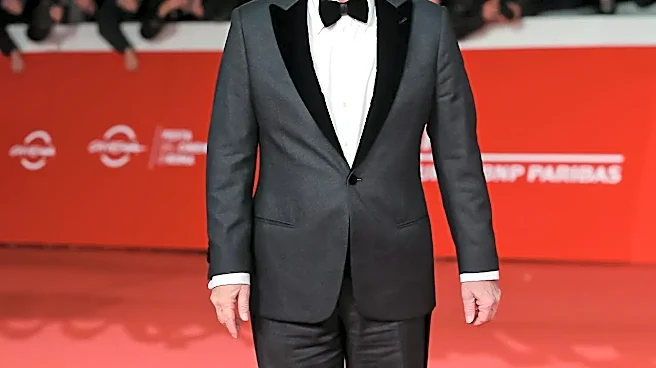
There's a reason studios fly their biggest names to the shores of the Lido. Star power is the engine of the festival machine. A-listers like Penélope Cruz, Javier Bardem, and Guy Pearce, all with films at the 2026 festival, don't just attend premieres;
they ignite them. Their presence guarantees a global media frenzy, turning a film screening into a worldwide event. For a movie seeking distribution or hoping to kickstart a months-long Oscar campaign, this visibility is priceless. A photo of a star on a water taxi is marketing gold, generating buzz that no trailer can buy. The festival circuit, starting with Venice, is the official launchpad for awards season contenders. Films like Martin McDonagh's "Wild Horse Nine" or Florian Zeller's "Bunker" arrive with high hopes, using their famous casts to signal prestige and command attention in a crowded field. The festival gives these films a narrative before they even reach a mainstream audience.
Judging the Art, Not the A-Lister
Inside the theater, however, the currency changes. Critics are a notoriously tough audience, and their calculus has little to do with who is wearing Chanel on the red carpet. Their job is to look past the hype and evaluate the film itself: the script, the direction, the performances, and the originality of the vision. A standing ovation is a tradition, but it's the reviews that follow that shape a film's future. A critic's allegiance is to the art of cinema and to their readers, not to the public relations campaign of a major studio. They've seen it all, and the presence of a beloved actor can sometimes work against a film if the performance feels lazy or the project unworthy of their talent. This creates a fundamental tension at the heart of every major film festival: the spectacle designed to attract attention often has little bearing on the artistic merit being judged.
The Two-Track System of Success
Ultimately, film festivals highlight that Hollywood operates on a two-track system where commercial appeal and critical acclaim are separate, though sometimes overlapping, goals. A film can be torn apart by critics in Venice yet still find a massive audience based on its star power and marketing. Conversely, a small, starless film can emerge from a sidebar section like Critics' Week with rave reviews that propel it into the cultural conversation. History is filled with examples. Even at past festivals, A-list projects have landed with a thud, described as "ponderous" or "stilted," while the actors themselves receive praise for their commitment. The star did their job—they got people to pay attention—but the film couldn't hold it. The opposite is also true, where a little-known film becomes the talk of the town, forcing distributors and audiences to take notice.
Beyond the Festival Buzz
The reception at Venice is just the opening chapter. A film's life extends far beyond its premiere on the Lido. Strong reviews can help a smaller film secure a crucial distribution deal, ensuring it gets seen outside the festival bubble. For big-budget, star-driven movies, negative reviews can force a studio to rethink its marketing strategy, perhaps downplaying awards ambitions in favor of a more populist, genre-focused campaign. But the initial blast of attention provided by the A-lister has already served its primary purpose: it put the film on the map. It ensured that, for a few days in early September, the world was talking about it. What happens after—whether it becomes an Oscar champion or a box-office footnote—is a different story, one that the stars themselves have little control over once the credits roll.