


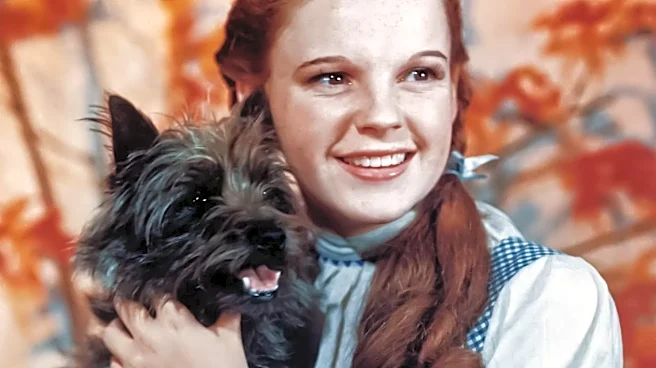

Everyone knows the story of Dorothy and the Wicked Witch of the West. But the cultural phenomenon of 'Wicked' proves the most powerful story was the one we were never told. It's more than a prequel; it's a profound political and social fable.
More Than a Villain’s Backstory
The magic
of 'Wicked' isn't that it makes you feel sorry for the Wicked Witch; it’s that it makes you question why she was ever called 'wicked' in the first place. The story of Elphaba, a brilliant and passionate student born with green skin, isn't a redemption arc. It’s an indictment. From her first moments at Shiz University, she is ostracized for being different. But her journey isn't driven by a desire to be evil. Initially, all she wants is to fit in, do good, and maybe even work for the wonderful Wizard of Oz. The story's central tragedy is that Elphaba becomes a public enemy precisely because she refuses to stay silent about injustice. She doesn't become 'wicked' because of her actions, but because a powerful regime needs a scapegoat to distract from its own corruption. It reframes villainy not as an inherent trait, but as a label assigned to those who threaten the status quo.
The Real Villains of Oz
The most radical twist in 'Wicked' is its revelation that the true villains aren't witches or flying monkeys, but charismatic leaders and their smiling enablers. The Wizard of Oz is reimagined not as a bumbling-but-kindly trickster, but as a manipulative, power-hungry fraud from our world. He and his press secretary, Madame Morrible, systematically strip the sentient Animals of their rights, using fear and propaganda to consolidate their power. In one of the story's most chilling lines, the Wizard explains his philosophy: 'Where I'm from, we believe in all sorts of things that aren't true. We call it history.' This line transforms Oz from a fantasy land into a mirror. Elphaba is branded a villain for exposing the Wizard's lies, showing how history is written by the victors and how easily a population can be convinced to fear what it doesn't understand. The story becomes a powerful allegory for how propaganda manufactures consent and demonizes dissent.
A Friendship That Changes Everything
At the emotional heart of 'Wicked' is the complex, transformative, and deeply moving friendship between Elphaba and Glinda. They begin as rivals: the popular, ambitious blonde and the brooding, green-skinned outcast. Their journey from mutual loathing to a reluctant, then profound, bond is what anchors the story's lofty political themes. Their relationship illustrates how connection can dismantle prejudice. Glinda, initially complicit in the Wizard's regime and obsessed with status, is forced to confront the moral cost of her popularity through her love for Elphaba. Her character arc isn't about becoming perfect, but about learning the difference between performing goodness and actually being good. Their iconic duet, 'For Good,' encapsulates the entire story's message: that the people who enter our lives can change us fundamentally, altering our path and reshaping who we are, for the better.
Rewriting What We Thought We Knew
By the time 'Wicked' concludes, it has done more than just retell 'The Wizard of Oz'. It has completely deconstructed it. The story reveals that key moments from the original tale—the origins of the Scarecrow, the Tin Man, and the Cowardly Lion—are all deeply connected to Elphaba's tragic fight for justice. Fiyero, the love of her life, becomes the Scarecrow as a result of a spell she casts to save him. The narrative dares to suggest that the entire story we grew up with was, in essence, a lie—the sanitized, official version of events. Elphaba never truly dies; she fakes her death to escape Oz with Fiyero, forever branded a villain but secretly free. This final revelation is the ultimate fulfillment of the story's themes. It empowers the audience to look past the official narrative and question who gets to write history, solidifying 'Wicked' as a story that doesn't just entertain, but encourages a more critical, empathetic view of the world.