






More Than Just a Restart
On average, a professional soccer match has about 45 throw-ins, far more than corner kicks or free kicks in dangerous areas. For decades, most teams treated them as an afterthought: get the ball, throw it down the line, and hope to keep possession. More
often than not, this resulted in losing the ball under pressure. But a tactical revolution has turned this mundane moment into a potential game-changer. In the attacking third of the field, a well-executed throw-in can function like a set piece, pinning an opponent deep in their own territory, creating chaos in the box, and generating a direct scoring opportunity. The key is that, unlike open play, there is no offside on a throw-in, allowing attackers to position themselves in otherwise illegal spots and exploit gaps before the defense can get organized.
The Long-Throw Specialist
The most obvious way a throw-in becomes a weapon is through sheer force and distance. The "long-throw specialist" is a player who can hurl the ball into the opponent's penalty area, effectively turning a sideline restart into a more chaotic version of a corner kick. Players like former Premier League midfielder Rory Delap built careers around this unique skill, causing panic among defenders as a flat, hard throw flew into the six-yard box. This tactic relies on creating an aerial mismatch, where tall, physical attackers can challenge for headers in a crowded area, hoping for a flick-on or a second ball to fall to a teammate for a shot. While it can be devastatingly effective, it requires a rare combination of upper body strength, core stability, and specific technique from the thrower.
Brains Over Brawn: The Modern Method
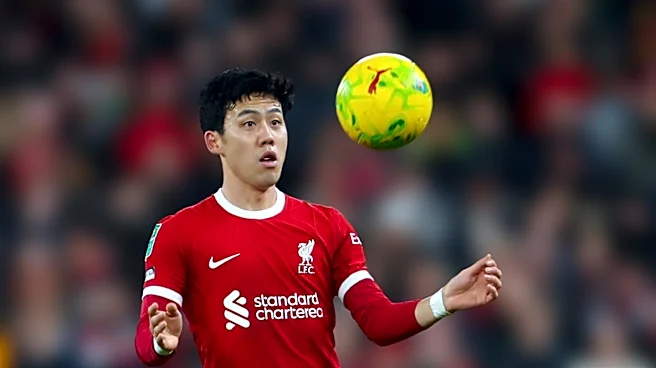
While the long throw still has its place, the biggest evolution has come from teams using intelligence and precision. The pioneer of this movement is Thomas Grønnemark, the world's first dedicated throw-in coach, who has worked with top clubs like Liverpool, Arsenal, and Ajax. Grønnemark's philosophy focuses on what he calls "long, fast, and clever" throw-ins. His work with Liverpool is a prime example. Before his arrival, the club retained possession on only 45.4% of their contested throw-ins, ranking them near the bottom of the league. By teaching players smarter movement, better spatial awareness, and precise throwing techniques to a teammate's feet, that number jumped to 68.4%, the best in the league. These "clever" throws aren't about distance, but about quick thinking and coordinated movement to pull defenders out of position and create space.
From Sideline to Scoring Chance
So how does a "clever" throw-in create a cup-winning chance? It starts with the thrower acting as a quarterback, scanning the field for a pre-planned routine. Instead of just launching the ball down the line, the routine might involve a player making a sharp movement toward the thrower, dragging a defender with them and opening up a pocket of space behind. The throw is then delivered quickly into that newly vacant area for a third player who is already making a run. Another common tactic is a quick give-and-go, where the thrower immediately gets the ball back after throwing it in, now as an active player who can cross or pass without being marked as tightly. These rapid, coordinated sequences are designed to exploit the defense's brief moment of disorganization. Before the backline can get set, the ball is already in a dangerous area, and a shot is being taken.