
The Fabric is the Foundation
The most intuitive way to create volume without weight is to start with the right materials. Designers have a roster of fabrics that are inherently light but possess enough stiffness to hold a shape. Organza, a crisp and sheer fabric often made from silk
or synthetic fibers, is a go-to for creating structured yet airy designs. Its stiffness allows it to stand away from the body, creating fullness without density. Similarly, tulle and other netting fabrics, famous for their use in ballet tutus and wedding veils, are masters of creating a poofy silhouette through layering. Multiple layers of this fine, hexagonal mesh can be gathered to build incredible volume that’s mostly just trapped air. Newer materials, like technical nylons and a revived textile called Neo Gazar, are also being used to inflate shapes with almost no weight at all.
A Hidden Internal Architecture
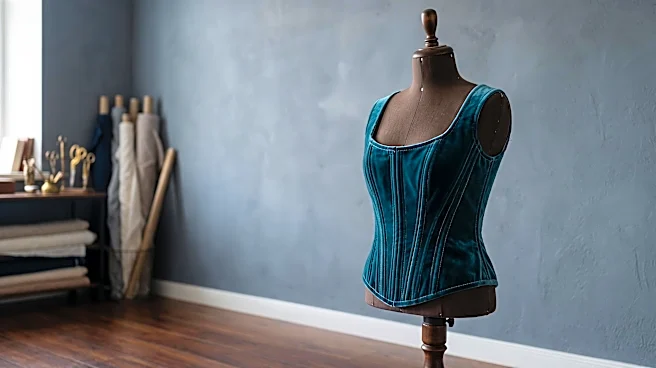
Sometimes, the secret to a garment's shape isn’t visible at all. Designers employ a variety of internal supports to give structure to softer fabrics. One of the most common tools is horsehair braid, a type of stiff, mesh-like netting now made from nylon or polyester. Despite its name, it's no longer made from actual horsehair. Sewn into the hem of a skirt, it gives the edge a bouncy, fluted shape that holds its own, creating a ripple effect that adds body to the entire piece. For more rigid structure, particularly in bodices or strapless designs, designers use boning. While historical corsets used heavy steel or whalebone, today’s boning is often made from lightweight plastics or flexible spiral steel that provides shape and support without being burdensome. In some couture garments, underlining—a technique where a structural fabric like cotton muslin is sewn to the back of the main fashion fabric—is used to give a soft material a crisper, more defined shape.
The Geometry of the Cut
Beyond materials and internal scaffolding, the very pattern of a garment is a key tool for building volume. The way fabric panels are shaped and seamed together can create fullness out of thin air. A circle skirt, for example, is cut from a doughnut-shaped piece of fabric, and its natural drape creates soft, undulating folds without any gathering. When designers want more controlled volume, they turn to techniques like pleating and gathering. By folding or bunching fabric strategically, they can multiply its visual mass. A gathered tier on a skirt or a puffed sleeve works by compressing a long piece of fabric into a smaller space, forcing it to billow outwards. This is pure geometry in action—using pattern-making to manipulate how a two-dimensional material behaves in three-dimensional space, turning flat cloth into a dynamic, voluminous form.
The Illusion of Layering
Often, what appears to be a single, heavy piece of fabric is actually an illusion created by layering multiple lightweight ones. A designer might use several layers of soft, sheer tulle under a skirt to give it a full, fluffy silhouette that a single layer of heavy fabric could never achieve without weighing down the wearer. This technique diffuses light and creates a sense of depth and density, tricking the eye into seeing more mass than is actually present. The layers trap air between them, which helps to puff out the shape and adds to the ethereal, floating quality. This is especially effective with transparent or semi-transparent materials like chiffon or organza, where the overlapping fabrics create a beautiful moiré effect while contributing to the overall volume. It's a masterful sleight of hand that delivers high drama with minimal physical weight.