


The Anatomy of a Great Scare
Let’s be honest: a jump scare is the cheapest trick in the horror playbook. A person in a mask leaping from a dark corner is startling, but it isn’t truly scary. What makes a moment in a Halloween Horror Nights (HHN) house land with terrifying impact
is the work the designers put in before the actor even moves. It’s the detailed set that tells a story, the oppressive sound design that builds dread, and the specific lighting that guides—or misguides—your eyes. The team at Universal are masters of this environmental storytelling. A single scare is just a punctuation mark; the sentence around it is what gives it meaning. When you remember a great HHN moment, you’re not just remembering the scare—you’re remembering the feeling of walking through a haunted Spanish manor or a spaceship where something is clearly wrong. Without that buildup, it’s just a prank. With it, it’s art.
Pacing Is the Secret Ingredient
The most common mistake a haunted attraction can make is relentless intensity. If every single corner has a scare, you become desensitized. It’s the horror equivalent of a song that’s nothing but a constant guitar solo—at first it’s impressive, but soon it becomes a monotonous drone. The best HHN houses understand this. They have a rhythm. They build tension with quiet, unnerving corridors, allowing your own imagination to do the heavy lifting. Then, after lulling you into a false sense of security, they hit you with a perfectly timed scare. Some fans have noted that in weaker years or less effective houses, the experience can feel like being shuffled through like cattle from one predictable scare to the next, which dulls the impact. But when the pacing is right, it’s a masterful manipulation of adrenaline and anxiety, ensuring each major scare lands with maximum effect.
The Connective Tissue: Scare Zones
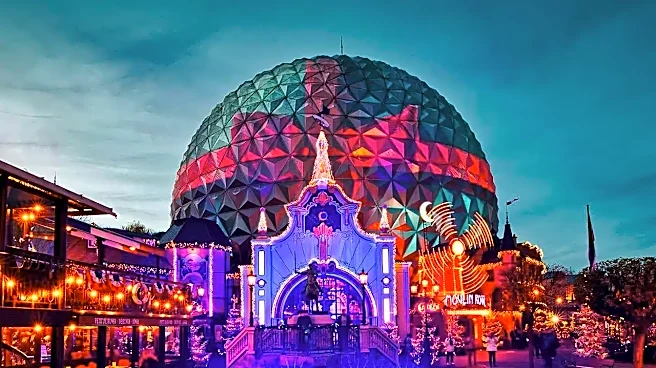
The argument for sequencing extends beyond the walls of the ten haunted houses. The experience of walking from one main attraction to another is just as critical. This is the job of the scare zones. These open-air themed areas are often seen as secondary attractions, but their role is vital. A good scare zone acts as an atmospheric bridge, ensuring the immersive spell of the event is never broken. When you exit a house based on a slasher film and walk through a zone themed to voodoo or alien invaders, you remain inside the world of horror. It prevents the jarring transition of stepping out of a terrifying house and immediately into a brightly lit section of the park with pop music playing. Critics have sometimes argued that scare zones can feel more like photo ops than genuinely frightening experiences, but their primary purpose isn't just to scare; it's to maintain the night's narrative and thematic momentum.
When the Sequence Breaks
You know the feeling. You’ve just survived a high-intensity house and emerge, heart pounding, back into the park... only to be dumped into an hour-long, un-themed line for the next attraction. This is where the sequence dies. Overcrowding is perhaps the biggest enemy of HHN’s meticulously crafted atmosphere. When the flow between experiences is choked by congestion or when the transition from a scare zone to a generic food court feels abrupt, the carefully constructed world shatters. It reminds you that you’re in a theme park, not a living nightmare. The creative teams at Universal work year-round to build these immersive worlds, but it's the operational logistics—the management of crowds, the placement of attractions, and the entertainment provided during long waits—that ultimately determine whether the night feels like a cohesive, terrifying journey or just a collection of disconnected scares.