



The 'Wicked' movie promises dazzling spectacle and beloved songs. But beneath the surface lies a darker, politically charged story, epitomized by an in-universe text that frames the unsettling task ahead for its all-star ensemble.
The Book That Isn't a Book
First, a point of clarification
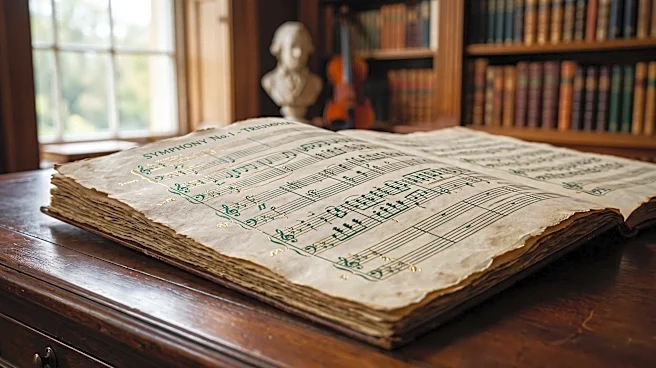
for those not deep in Oz lore: 'March of the Witch Hunters' isn't a real-world book you can buy. It's a song and a pivotal, chilling plot device within the world of 'Wicked' itself. In the story, it represents a piece of mass propaganda, a furious anthem sung by the citizens of Oz who have been whipped into a frenzy by the Wizard's regime. Its lyrics, with calls to 'kill the witch' because 'wickedness must be punished', are a tool of state-sponsored hatred directed at Elphaba. This piece of music functions as the terrifying culmination of a smear campaign, turning an entire population against one woman for daring to expose the truth. It's the sound of a society weaponizing fear, a theme far darker than what many associate with the Land of Oz.
From Broadway Romance to Political Allegory
The Broadway musical, while touching on these ideas, largely foregrounds the powerful friendship between Elphaba and Glinda. Gregory Maguire's 1995 novel, 'Wicked: The Life and Times of the Wicked Witch of the West,' is much more explicit in its political commentary. Maguire’s Oz is a grim, adult world grappling with fascism, systemic racism (against the talking Animals), and the mechanics of tyranny. The stage show softened these edges for a broader audience. Now, director Jon M. Chu’s two-part film adaptation has the screen time and creative ambition to re-engage with that darker source material. Chu has spoken about not wanting to let the spectacle get in the way of the story's emotional core and political message, suggesting a version of 'Wicked' that leans into the discomfort.
An Unsettling Task for the Ensemble
This is where the 'unsettling' nature of the story truly lands on the cast. For Cynthia Erivo, playing Elphaba means embodying a character who becomes the target of state-sanctioned propaganda and genocidal rage. For Ariana Grande, the challenge is perhaps even more complex. She must portray Glinda's journey from a bubbly, privileged girl who initially benefits from the oppressive system to someone wrestling with her own complicity. Glinda's ambition and desire for public adoration are used by the Wizard's regime, making her a well-meaning moderate who, for a time, enables tyranny. It's a nuanced and uncomfortable character arc that requires portraying inner conflict over simply being 'good.' The entire ensemble, including Michelle Yeoh as the manipulative Madame Morrible and Jeff Goldblum as the charismatic but fraudulent Wizard, must navigate a story about how easily a society can be convinced to hate.
Why It Matters for the 'Wicked' Films
The decision to split the film into two parts wasn't just a commercial one; it was a creative one that allows these themes to breathe. Chu has stated a commitment to making each part an emotionally complete story, giving the narrative space that a single film couldn't. This structure allows for a deeper dive into the Wizard's propaganda machine, the systematic stripping of rights from the talking Animals, and the moral compromises made by its heroes. The story becomes less about a simple misunderstanding and more about the active, intentional creation of a villain to maintain power. Elphaba isn't just misunderstood; she is systematically vilified. 'March of the Witch Hunters' is the terrifying payoff to that plotline, a musical number that's less about fantasy and more about the real-world horror of mass hysteria.