









The Scene of the Crime
The 2010 FIFA World Cup. Bloemfontein, South Africa. It was a heavyweight clash in the round of 16: historic rivals England versus Germany. The Germans had surged to a 2-0 lead, but England clawed one back. Then, in the 38th minute, came the moment. England midfielder
Frank Lampard saw the German goalkeeper slightly off his line and launched an audacious chip. The world watched as the ball soared, struck the underside of the crossbar, and bounced down, clearly a good yard over the goal line. It was a legitimate goal, a 2-2 equalizer. The English players wheeled away in celebration. But the referee, Jorge Larrionda, waved play on.
The Shot Heard 'Round the World
In the stadium, there was confusion. For the millions watching on television, there was immediate, undeniable proof. Replays showed the ball was not just over the line, but decisively so. The on-field officials had missed it entirely, caught out by the speed of the play and the backspin that caused the ball to bounce back out of the goal. A deflated England never recovered their momentum, eventually crashing out of the tournament with a 4-1 loss. But the result of the match quickly became a footnote. The real story was the glaring, globally televised injustice that exposed the flaws of a system that refused to evolve.
The Uncharacteristic U-Turn
For years, FIFA, soccer's global governing body, and its president, Sepp Blatter, had been staunchly opposed to using any form of technology to aid referees. They argued it would disrupt the flow of the game and undermine the “human element” of officiating. But the Lampard “ghost goal,” as it was quickly dubbed, was too egregious to ignore. The outcry was global and deafening. Just two days after the match, Blatter performed a stunning reversal. He publicly apologized to England and admitted that it would be a “nonsense” not to reopen the debate on goal-line technology. The sheer embarrassment of such a high-profile error had done what years of lobbying could not: it forced the door open for change.
A New Era of Officiating
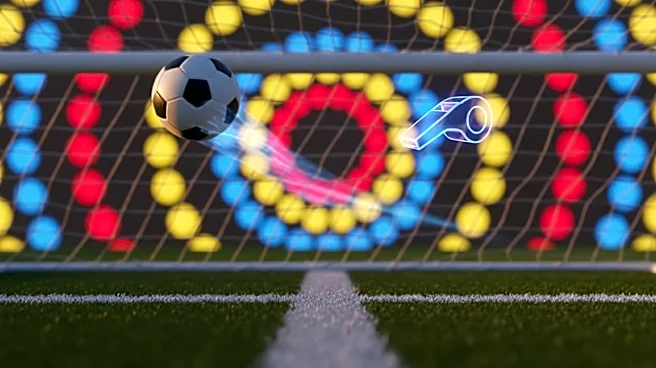
Lampard's goal became the poster child for reform. Spurred into action, the International Football Association Board (IFAB), the sport’s rule-making body, began seriously testing various goal-line technology (GLT) systems. In July 2012, the IFAB officially approved its use, a landmark decision. The technology, which uses a system of high-speed cameras or magnetic fields to instantly determine if a ball has crossed the line and alerts the referee via a special watch, was first deployed by the English Premier League for the 2013-14 season. Its major international debut came at the 2014 FIFA World Cup in Brazil—fittingly, just four years after the incident that made it a necessity.
The Legacy of a Ghost Goal
Today, goal-line technology is a standard and non-controversial feature of top-level soccer. The debate is over; the technology works, providing instant and definitive answers to the most crucial question in the sport: was it a goal? The Lampard incident is now viewed as a necessary sacrifice. It was the tipping point that dragged a traditionalist sport into the 21st century. Furthermore, by breaking the technological seal, it paved the way for the later introduction of the Video Assistant Referee (VAR), which reviews a wider range of on-field decisions. While frustrating for England, that one shot in Bloemfontein ultimately delivered a fairer game for everyone.