
The Promise of Pure Spectacle
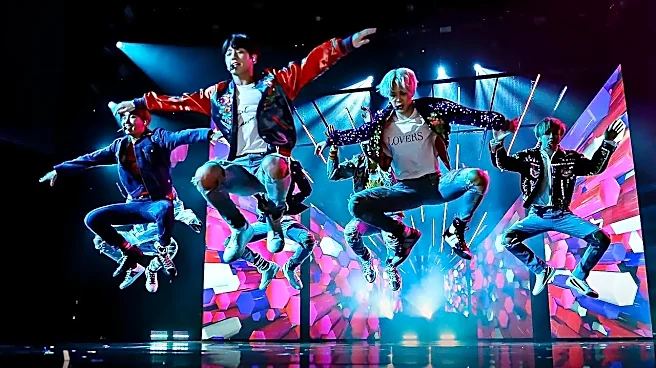
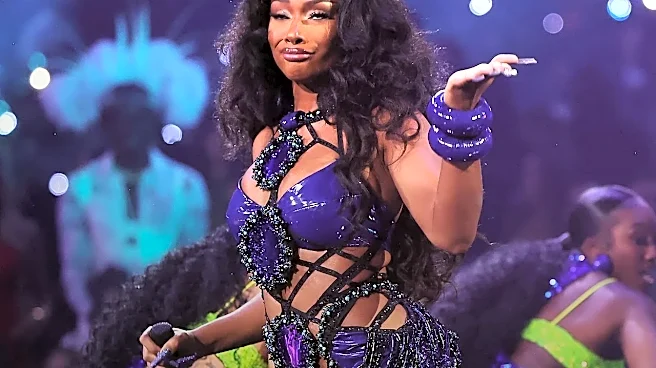
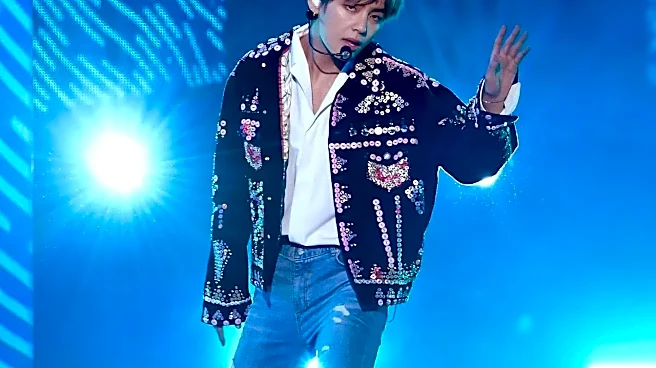
Let's be clear: there's nothing wrong with a giant, over-the-top VMA performance. It's part of the brand. Think of Lady Gaga’s dramatic, bloody “Paparazzi” in 2009 or Beyoncé's 16-minute “Lemonade” medley
in 2016, a masterclass in visual storytelling and stage command. These moments are designed for maximum impact, using every tool available—intricate choreography, complex lighting, and massive set pieces—to create a cultural event. The goal is to overwhelm the senses and deliver an experience so grand it feels historic by sheer force of will. For years, this maximalist approach has defined awards shows, with artists competing to see who can build the most jaw-dropping universe in under five minutes. It's an arms race of spectacle, and for a show built on the power of the video, it makes perfect sense.
Anarchy and Authenticity: Nirvana, 1992
But the moments that truly burn into our collective memory often come from the opposite impulse. Consider Nirvana's 1992 performance of "Lithium." The band wanted to play their new song "Rape Me," but MTV executives, fearing controversy, refused. As a defiant compromise, Kurt Cobain opened with the song's first few chords before launching into "Lithium." The stage was simple: just the band and their instruments. The performance itself was raw, chaotic, and bristling with antagonism. It ended with bassist Krist Novoselic throwing his instrument into the air and accidentally hitting himself in the head, while Dave Grohl repeatedly taunted Axl Rose from the drum kit. It was messy, unpolished, and utterly captivating. With no spectacle to hide behind, all the audience could focus on was the band's furious energy. That raw authenticity is what became legendary, not a single lighting cue or prop.
The Power of a Single Spotlight: Adele, 2011
Nearly two decades later, Adele created an equally iconic moment with the same principle. Amidst the night's typical chaos, she took the stage to sing "Someone Like You." The staging was almost nonexistent: just Adele, a piano, and a single spotlight. In a room full of elaborate productions, her performance was an act of radical simplicity. The silence was the point. Stripped of all distractions, her raw, emotional vocal performance was all that remained. The camera caught audience members like Britney Spears completely captivated. The performance didn't just cut through the noise; it obliterated it. It proved that true power doesn't always need pyrotechnics. Sometimes, all it needs is a vulnerable human emotion, delivered with breathtaking talent. It was a quiet moment that became one of the loudest statements of the night.
Stripping Down to Find a New Voice
Even artists known for spectacle have used simplicity to redefine their narrative. In 2013, Miley Cyrus was at the center of a media firestorm following her controversial, prop-heavy performance with Robin Thicke. Later that year at the MTV Europe Music Awards, she performed her ballad "Wrecking Ball." Instead of another shocking spectacle, she opted for a starkly simple presentation. Standing still in a plain white outfit against a backdrop showing her own tear-streaked face, she just sang. The performance forced audiences to focus on the song’s powerful vocals and emotional core. It was a deliberate pivot from the chaos, a move that showcased her talent over her antics and helped solidify "Wrecking Ball" as a genuine hit. By stripping everything away, she demonstrated a new level of artistic maturity and control.