







1. Franz Beckenbauer: The Tactical Revolution
Before Franz Beckenbauer, defenders were destroyers. Their job was to tackle, clear the ball, and stay out of the way. Then came “Der Kaiser.” With West Germany in the 1966, 1970, and 1974 World Cups, Beckenbauer perfected the role of the *libero*, or sweeper.
Playing behind the main defensive line, he was free to read the game, intercept passes, and, most radically, surge forward to launch attacks. He wasn't just a defender; he was a playmaker from the back. His elegance and intelligence on the ball proved that defending could be a creative act. Beckenbauer’s career marks the shift from rigid, position-based soccer to a more fluid, tactical game where a player’s intelligence could redefine the possibilities of his role. He won the World Cup as both a player (1974) and a manager (1990), a testament to his unparalleled understanding of the game's strategic depths.
2. Johan Cruyff: The On-Field Brain
If Beckenbauer showed a defender could be a creator, his contemporary Johan Cruyff proved a player could be the team's entire philosophy. Leading the Netherlands to the 1974 World Cup final, Cruyff was the on-field engine of “Total Football.” The system was revolutionary: players were not locked into positions, instead interchanging roles fluidly to press opponents and dominate space. A defender could pop up on the wing; a forward could drop into midfield. It required immense technical skill, fitness, and, above all, intelligence. Cruyff was its conductor, a chain-smoking maestro directing the orchestra with a flick of the heel or a pointed instruction. His career represents the dawn of the player as a tactical mastermind, someone whose vision shaped not just a single play but the entire team's identity. He didn't win the trophy, but his 1974 Dutch team is arguably the most influential runner-up in history.
3. Diego Maradona: The Individual Genius
By the 1980s, defending had become more organized and cynical. In this world of tactical fouling and tight man-marking, a different kind of hero emerged. Diego Maradona was a force of nature, a player whose individual brilliance could render any system irrelevant. His performance at the 1986 World Cup in Mexico is the stuff of legend. While his Argentinian teammates were solid but unspectacular, Maradona was a deity in shorts, single-handedly dragging his nation to glory. His career marks the zenith of the flawed, individual genius—a player so transcendent he could overcome not just opponents, but the very structure of the modern game. His infamous “Hand of God” goal followed by his mesmerizing solo run against England in the same match perfectly encapsulated his blend of street cunning and divine talent. He was the last of his kind before soccer became a truly global, corporate enterprise.
4. Zinédine Zidane: The Complete Modern Athlete
As soccer entered the 21st century, the game demanded a new type of player. The speed was faster, the media scrutiny was higher, and the physical demands were immense. Enter Zinédine Zidane. The French icon, who led his country to glory in 1998 and to the final in 2006, was the prototype for the modern superstar. He blended the grace and vision of a classic playmaker with the power and physique of a modern athlete. Standing over six feet tall, he could shield the ball with immense strength, yet his touch was as delicate as a feather. He could score with thunderous volleys or ghost past defenders with an elegant pirouette. “Zizou” represented the synthesis of art and power. His career shows the evolution towards the complete midfielder, a player who needed to be big, strong, fast, *and* technically sublime to dominate at the highest level. His headbutt in the 2006 final only added to the myth of a man driven by raw passion and sublime skill in equal measure.
5. Lionel Messi: The Era of Sustained Super-Humanism
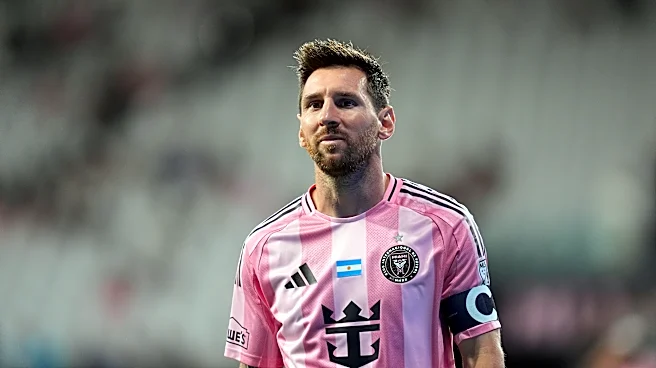
What comes after the complete athlete? The data-driven phenomenon. Lionel Messi’s career tracks the game’s evolution into an era of sports science, advanced analytics, and unprecedented professionalism. For over 15 years, Messi (along with his rival Cristiano Ronaldo) has produced statistical output that was once unimaginable. His genius isn't just in a single moment or tournament; it's in the relentless, decade-plus consistency of his brilliance. He embodies the modern age, where every aspect of a player's performance is optimized, from diet to recovery. His 2022 World Cup victory with Argentina wasn't the explosion of a young Maradona but the culmination of a career of sustained excellence. He evolved his game from a darting winger to a deep-lying playmaker, showcasing an intelligence that allowed him to dominate even as his physical gifts changed. His career represents the pinnacle of modern soccer: the fusion of otherworldly talent with the scientific pursuit of eternal greatness.