
More Than Just a Singalong
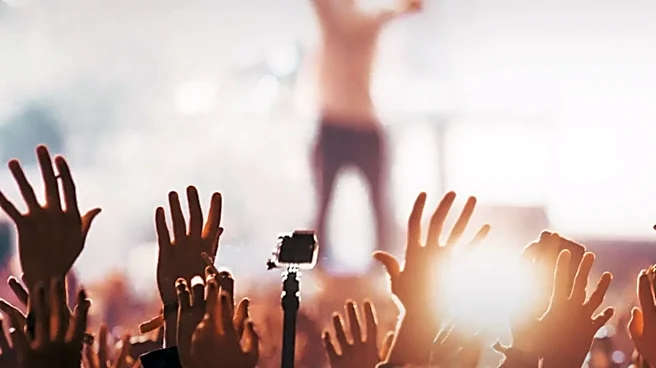
It’s one of the most powerful moments in live music, and it happens when the star of the show goes silent. This isn’t your standard call-and-response or a half-hearted chorus chant. This is a full-throated, passionate takeover, where the audience becomes
the lead vocalist. For a few transcendent minutes, the barrier between the performer and the crowd completely dissolves. The energy doesn’t just flow from the stage to the field; it surges back, creating a feedback loop of pure emotion. The song, at that moment, no longer belongs to the artist who wrote it. It belongs to everyone. This phenomenon isn't just a cool concert trick; it’s a fundamental expression of why live music endures. It’s a testament to a song’s ability to weave itself into the fabric of our lives, becoming a shared anthem for a temporary community of thousands.
The Science of a Unified Crowd
There's a sociological term for this feeling: 'collective effervescence'. Coined by sociologist Émile Durkheim to describe the unifying energy of religious rituals, it perfectly captures the electric harmony of a crowd united in song. It’s a shared emotional high that makes you feel part of something much larger than yourself. Recent psychological studies confirm this isn't just a fleeting buzz; experiencing collective effervescence at a concert can measurably boost happiness and a sense of meaning for days afterward. Several factors make this more likely to occur. A strong, one-sided emotional connection to the artist and a deep immersion in the lyrics both pave the way for this peak experience. When thousands of people who have formed their own personal memories with a song suddenly realize they are not alone, the collective release is immense. Their individual brain waves can even synchronize, turning a disconnected audience into a single, cohesive entity.
A Moment of Vulnerability and Validation
From the artist’s perspective, this is the ultimate reward. It’s one thing to hear applause; it’s another to witness your own words, your own melody, sung back with such force that you become a spectator at your own show. It is the most visceral form of validation an artist can receive. Sometimes, these moments are born from pure joy. But often, the most memorable ones come from a place of vulnerability. At the 2023 Glastonbury Festival, Lewis Capaldi, who had been open about his struggles with his voice and Tourette's syndrome, found himself unable to finish his hit 'Someone You Loved'. As he stepped back, visibly struggling, the massive crowd took over, carrying the song for him in an astonishing act of collective support. It was more than a singalong; it was a city of people telling an artist it was okay to be human. That moment of shared empathy became one of the most talked-about performances of the year.
The Anthems That Belong to Everyone
Certain songs seem destined for this fate. They are built with hooks so powerful and lyrics so universal that they demand to be shouted by a crowd. Florence + The Machine’s 'Dog Days Are Over' is a prime example. The song's building euphoria and cathartic release make it a ritual at her shows, with Florence Welch often acting as a conductor for her choir of thousands. The Killers’ 'Mr. Brightside' has taken on a life of its own, becoming an unofficial anthem at festivals and clubs worldwide, with a crowd singalong that is practically compulsory. The phenomenon can even transcend the artist's own performance. At a Green Day concert in London’s Hyde Park, the 65,000-strong crowd spontaneously broke into a full rendition of Queen's 'Bohemian Rhapsody' before the band even took the stage. It was a stunning tribute, proving that some songs become so ingrained in our collective culture that they can ignite a crowd all on their own.