




Faith: The Genre-Bending Mystery
Imagine a romance that morphs into a thriller, then maybe a supernatural drama, without ever letting you get comfortable. That’s the tightrope walk of Paul Andrew Williams’ 'Faith,' starring James McAvoy and Erin Doherty. The premise sounds simple enough,
but reviews from the festival praise its refusal to be pinned down. One moment it feels like an intimate character study, the next a high-stakes thriller, and then it flirts with something else entirely. This constant shifting is precisely the point of division. For some, it’s an invigorating and refreshing film that captures the emotional risks of human connection. For others, the blend of backroom horror, campy thriller, and cheesy romance tropes might feel jarring. The one thing critics agree on? You can't pinpoint where it's going, making it one of the most talked-about and unpredictable viewing experiences at the festival.
Fjord: A Test of Ideological Limits
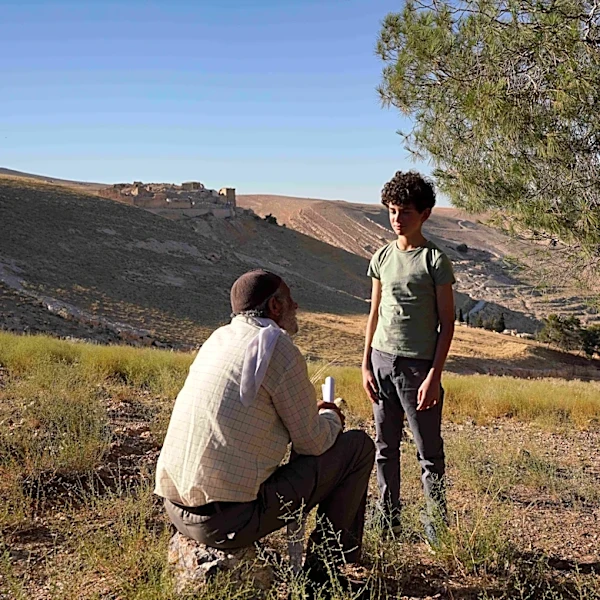
Cristian Mungiu, a director known for his precise and intellectually challenging films, arrived at TIFF with 'Fjord,' a movie that seems built to start arguments. The story follows a Romanian-Norwegian family whose traditional religious beliefs clash with secular Norwegian child-protection laws. Mungiu deliberately avoids melodrama, opting for a slow, observational style that forces the audience to confront difficult questions about cultural differences, intolerance, and the failure of dialogue in a polarized world. It’s a film more interested in debate than easy answers. Some viewers have hailed it as a masterclass in scriptwriting that spurs beautiful discussion. Others, however, have found its script to be a 'stacked-deck' that turns a complex conflict into a self-satisfied awards contender. This is the definition of a movie that your friends will argue about for hours after leaving the theater.
Minotaur: The Bleakly Comic Labyrinth
Russian director Andrey Zvyagintsev's 'Minotaur' took home the Grand Prix from Cannes and landed in Toronto with immense expectations. Described as a bleak but surprisingly funny look at modern Russia, the film uses the myth of the Minotaur's labyrinth as a metaphor for a world of private desire and public violence. It transforms a story of marital jealousy into a deeper exploration of vulnerability and the inability of wealth to protect against emotional chaos. While some critics have hailed it as Zvyagintsev's most assured work to date, others who saw it at Cannes were left disappointed, finding it fell short of its prize-winning reputation. Its patient pacing and restrained style are either mesmerizing or alienating, depending on which critic you ask, making it a classic festival love-it-or-hate-it proposition.
Coward: A War Film Without the War
A World War I movie that isn't about the battles is a creative risk in itself. Lukas Dhont’s 'Coward' focuses instead on an intimate love story between two men, Pierre and Francis, that unfolds behind the front lines. The film uses art, theater, and desire as forms of resistance against the brutality surrounding them. Critics have praised the remarkable chemistry between the leads and its moving portrayal of finding humanity in the bleakest of circumstances. However, the very thing that makes it unique is also a point of contention. Some reviews note that while the central romance is tender, the film's broader ideas about war, trauma, and courage feel frustratingly underdeveloped. It's a film that pushes the boundaries of the war genre, asking whether a story about choosing love and life can be just as powerful as one about combat.