




The Boho-Chic Misconception
For most shoppers, the peasant blouse is a straightforward affair. It evokes images of 1970s music festivals, floral headbands, and a general vibe of carefree, hippie style. It’s the uniform of summer weekends, easily paired with denim shorts or a flowing
maxi skirt. Its loose fit, billowy sleeves, and gathered neckline have become synonymous with a relaxed, bohemian aesthetic. While not incorrect, this popular perception is a single, relatively recent chapter in a much larger story. To see the peasant blouse as merely a product of the '70s is to miss the profound cultural narratives stitched into its very fabric.
Deep Roots in Folk Tradition
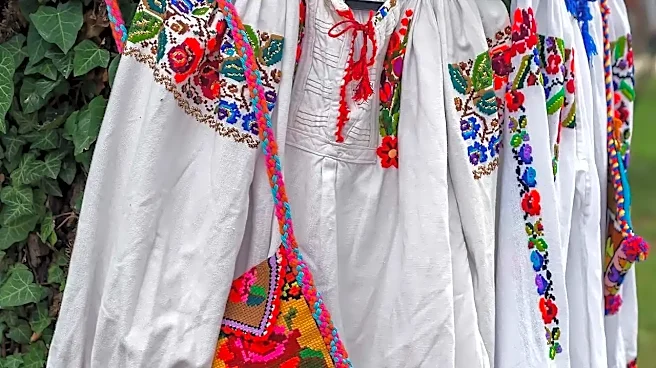
Long before it graced the Woodstock fields, the peasant blouse was a cornerstone of folk attire in Eastern and Central Europe, particularly in Romania and Ukraine. Known as the ie in Romania or the vyshyvanka in Ukraine, this garment was far more than simple clothing; it was a form of identity. Hand-embroidered with intricate patterns passed down through generations, each blouse told a story about the wearer's life, region, social status, and marital status. The symbols and colors were a complex code, representing everything from fertility and protection against evil spirits to the connection between the sky and the earth. Made from durable, natural fibers like linen or hemp, these blouses were practical garments for rural life, but they were also sacred heirlooms.
A Journey from Folk to Fine Art
The blouse’s journey into Western consciousness didn't begin with rock and roll, but with royalty and art. In the early 20th century, Queen Marie of Romania championed the traditional ie, wearing it as a powerful symbol of national pride and cultural unity. Her high-profile adoption of folk dress helped elevate it from a garment worn exclusively by peasant women to an item of national and aristocratic significance. Around the same time, the art world took notice. French painter Henri Matisse became fascinated with the blouse after being gifted several by a Romanian friend. His famous 1940 painting, "La Blouse Roumaine," immortalized the garment, cementing its status as an object of artistic beauty and intrigue for an international audience.
The Counter-Culture Emblem
By the 1960s, the peasant blouse was ready for its next transformation. As the counter-culture movement blossomed, its members sought to reject mainstream consumerism and embrace ideals of freedom, authenticity, and a return to nature. The handmade, ethnic-inspired blouse was a perfect fit. It became a symbol of non-conformity, adopted by bohemians, artists, and hippies as a visual stand against the sleek, manufactured fashions of the era. Its loose silhouette offered a sense of physical freedom that mirrored the movement's social ideals. This era is what defined the blouse for generations of American shoppers, linking it forever with a specific brand of '70s nostalgia.
Reading the Blouse Today
From Yves Saint Laurent's 1981 collection inspired by Matisse's painting to its constant reinvention by modern designers, the peasant blouse remains a fashion staple. But understanding its full history changes how we see it. It’s not just a trend that comes and goes; it’s a piece of living history. The embroidery that a modern shopper might see as merely decorative is part of a language that once communicated a woman’s entire life story. The billowy sleeves, designed for ease of movement in the fields, became an expression of social liberation. Knowing this transforms the act of wearing one from a simple style choice into an appreciation of a global story of craft, identity, and resilience.