




The Original Vision
When creator Darren Star first envisioned his American-in-Paris fairytale, he brought in a legend: Patricia Field, the visionary costume designer behind 'Sex and the City'. Field joined as a costume consultant for the first season, tasked with establishing
the show's sartorial DNA. The initial concept flirted with a familiar narrative: the classic makeover. The idea was for Emily Cooper to undergo a style evolution, shedding her bright, American optimism for the chic, understated, and often monochrome palette of a true Parisian. Think Anne Hathaway's transformation in 'The Devil Wears Prada'—a predictable, if elegant, journey from outsider to insider. It was a safe, well-trodden path that would have made Emily’s assimilation into French culture a visual one.
A 'More is More' Rebellion
That conventional approach was quickly abandoned. Field's most crucial decision was hiring Paris-based costume designer Marylin Fitoussi, who would ultimately take the lead and define the show's look. Fitoussi had a completely different philosophy, one built on a rebellion against fashion's unwritten rules. She saw the idea of a subdued makeover as boring and antithetical to the character. Instead, she championed a 'more is more' ethos, using clothes as a vehicle for joy, confidence, and expression. For Fitoussi, Emily's wardrobe wasn't a mistake to be corrected; it was her armor. The point wasn't for her to blend in, but to stand out as a vibrant, unapologetic American navigating a foreign culture—a visual 'fish out of water'.
The Power of Being 'Ringarde'
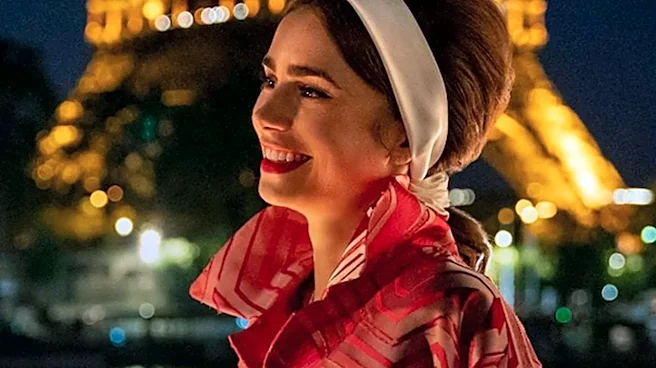
The result is the eclectic, pattern-clashing, and color-saturated style that has become the show's signature. From the Eiffel Tower-print blouse in Season 1 to the endless parade of clashing designer pieces, Emily's outfits telegraph her personality: optimistic, a little naive, and completely unwilling to conform to the muted tones of her Parisian colleagues. The show even winks at the criticism, having a French couturier label one of Emily's charms 'ringarde,' or tacky. By rejecting the quiet-luxury makeover, Fitoussi and Field gave the show its most powerful conversation starter. The fashion became a lightning rod for debate, generating countless articles, social media posts, and parodies. It wasn’t just costuming; it was character development and a core part of the show's polarizing, must-watch appeal.
Imagining a Different Emily
What if they had played it safe? An Emily dressed in elegant neutrals and classic trench coats would have told a very different story. The visual clash between her and her intimidatingly chic boss, Sylvie, would have been muted. The character's journey might have felt less about an American bringing her unique perspective to Paris and more about Paris changing her. The show likely would have been less visually arresting and, arguably, less memorable. The decision to embrace a loud, sometimes questionable, but always confident style ensured that 'Emily in Paris' could never be ignored. It cemented the idea that fashion on television doesn't have to be aspirational in a traditional sense; it can be a joyful, messy, and authentic reflection of a character's inner world.