






Start with the Handfeel and Weight
Before you even look at a price tag or a label, touch the fabric. High-quality material has a certain presence. Whether it’s cotton, wool, or silk, it should feel substantial, not thin or flimsy. At the recent London Fashion Week, designers showcased
collections with rich, textured fabrics like velvet, corduroy, and chunky knits, all chosen for their satisfying weight and drape. A quality fabric isn't necessarily heavy, but it feels dense and well-constructed. A quick test is to crumple a corner of the fabric in your hand for a few seconds. If it springs back with minimal wrinkling, it's a sign of good fibers and construction; if it holds onto creases tightly, it may age poorly.
Read the Label Like an Expert
The small tag on the inside seam is your best source of information. Look for high percentages of natural fibers like cotton, linen, wool, and silk, which are known for their breathability, comfort, and durability. Synthetics aren't always bad—a small amount of elastane can add necessary stretch—but be wary of garments made entirely from low-grade polyester or acrylic. This season, a focus on craftsmanship and natural materials was evident, with some designers committing entirely to fabrics, threads, and dyes derived from the earth. This industry shift reinforces a key consumer takeaway: a garment's composition is a primary indicator of its lifespan and comfort.
Examine the Weave and Opacity
Hold the garment up to a light source. Unless it's intentionally sheer, a well-made fabric should not be transparent. If you can easily see through a t-shirt or dress, it suggests the material is thin and likely won't last many washes. A tight, dense weave is a hallmark of durability. You can test this by gently rubbing the fabric between your thumb and forefinger; in a poor-quality weave, the threads might shift or pull apart, whereas a secure weave will feel stable. This density is what gives high-end tailored pieces their sharp, clean lines on the runway.
Turn It Inside Out to Check the Seams
The inside of a garment reveals the truth about its construction. High-quality items feature clean, straight, and consistent stitching. Look for a high stitch density—more stitches per inch indicate a stronger, more durable seam. You shouldn't see loose threads, raw edges (unless it's a design choice), or puckering. At stress points like the shoulders, armholes, and crotch, look for reinforced or double stitching. The meticulous tailoring seen in London collections relies on these precise construction techniques to ensure a garment holds its shape and structure perfectly.
Look for Matched Patterns
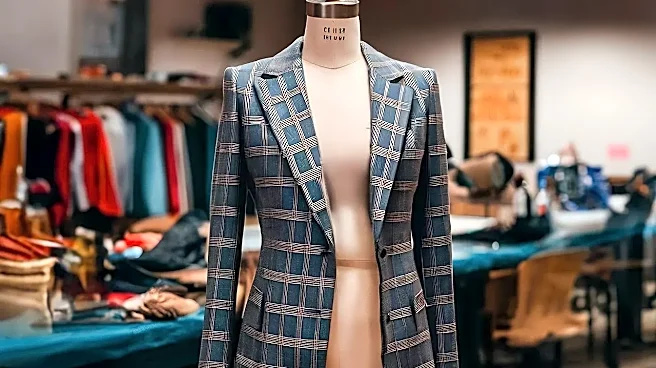
If a garment features stripes, plaids, or a repeating print, check if the pattern aligns at the seams. On a well-made shirt, the stripes on the sleeve should meet the stripes on the torso seamlessly, and the pattern on a pocket should align with the fabric behind it. Pattern matching requires more fabric and more time during production, so it's often skipped in cheaper clothing. Seeing this attention to detail, which was evident in the intricate floral and plaid fabrics on the London runways, is a reliable sign that the manufacturer didn't cut corners.
Don't Forget the Details: Buttons and Zippers
Finally, inspect the hardware. Buttons should feel sturdy and be sewn on securely, sometimes with a smaller anchor button on the inside for reinforcement. Buttonholes should be neat and well-finished, without fraying threads. Zippers are another major clue; they should glide smoothly without snagging and lie flat. A flimsy plastic zipper or loosely attached buttons are telltale signs of a garment that was made in a rush. These small components are a testament to the overall thought and care invested in a piece, a principle that defines luxury craftsmanship.