






A City of Water and Light
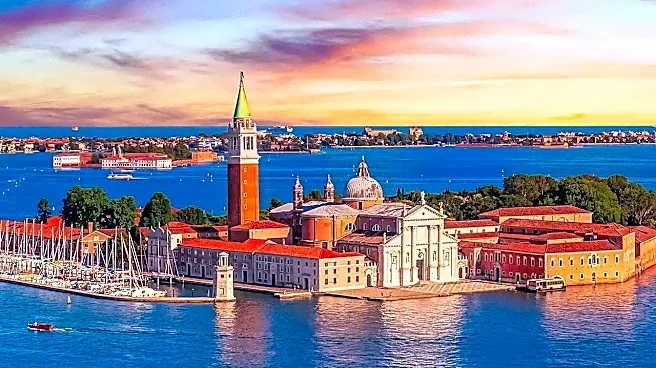
First, the obvious: Venice is beautiful. But its cinematic appeal goes far beyond pretty canals. For a cinematographer, the city is a dream of light. With no roads or cars, the urban soundscape is defined by lapping water and footsteps on stone, creating
a unique sonic environment. The light itself possesses a liquid quality, constantly reflecting off the water and giving every shot the feel of a living painting. This interplay between light and water provides a dynamic, ever-changing canvas. Artists have been drawn to this ethereal quality for centuries, and filmmakers are no different. Whether it’s the golden glow of a sunrise hitting the wet Istrian stone of St. Mark's Square or the hazy fog of a winter morning, the city offers a natural palette that is almost impossible to replicate.
The Poetry of Decay
For many filmmakers, Venice's true allure lies not in its grandeur, but in its glorious decay. It is a city of crumbling palazzos and a sinking foundation, a place where breathtaking beauty coexists with a sense of mortality. This duality is a narrative goldmine for directors interested in complex themes. Films like Luchino Visconti’s “Death in Venice” (1971) and Nicolas Roeg’s “Don’t Look Now” (1973) masterfully use the city’s labyrinthine alleys and unsettling quiet to explore themes of obsession, grief, and decline. The Venice on screen is often not the pristine postcard image, but a place of masks, mirrors, and psychological depth. It's a setting that can be romantic, but also deeply unsettling, making it perfect for thrillers and dramas that need an atmosphere of beautiful unease.
An Inherently Theatrical Stage
Venice is structured like a stage set. Its narrow alleys often open unexpectedly into grand public squares, or “campi,” creating natural dramatic reveals. The city's history is intertwined with performance, from the legacy of playwright Carlo Goldoni, who revolutionized theater here, to the famous masks of Carnevale. This inherent theatricality allows Venice to become a character in the story, not just a backdrop. It can be a playground for action sequences, as seen in “Casino Royale” or “Mission: Impossible – Dead Reckoning Part One,” where boat chases replace car chases. Or it can serve as a timeless setting for period pieces, since the lack of modern infrastructure means directors can capture a historical feel with minimal digital alteration.
The Creative Constraint
Ironically, one of the biggest draws for ambitious directors is how difficult it is to film in Venice. The logistical challenges are immense. There are no cars or trucks; all equipment must be transported by boat and then often carried by hand across bridges and through narrow streets. Obtaining permits is a complex process, especially for iconic and heavily touristed areas like the Rialto Bridge or St. Mark's Square, with shoots often restricted to the very early morning hours. These hurdles effectively filter out casual productions. The directors who choose to shoot in Venice are typically the ones with a powerful, specific vision who are willing to overcome the obstacles. The constraints force a level of meticulous planning and creative problem-solving that can elevate the final product, making every shot feel earned and deliberate.