




Born in the City, Built for the Road
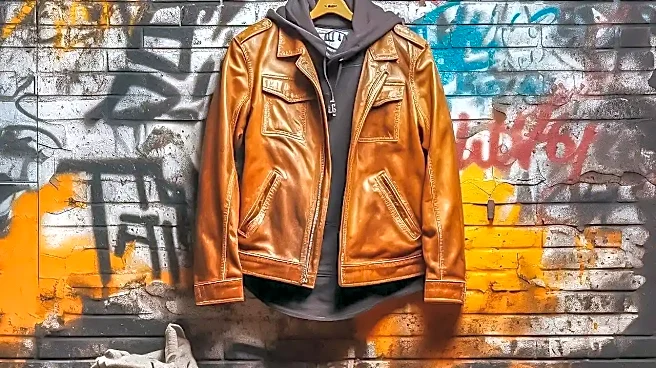
Before it was the epitome of cool, the leather jacket was a piece of New York innovation. The story begins not on a runway, but in a Lower East Side basement in 1928, where a Russian immigrant named Irving Schott designed the first modern motorcycle jacket.
He called it the “Perfecto,” named after his favorite cigar. With its asymmetrical zipper designed to block wind and a rugged build for protection, it was pure function. Sold for $5.50 at a Long Island Harley-Davidson dealership, it was engineered for survival on the open road, not for turning heads in a speakeasy. This origin is key: the jacket wasn't born from vanity but from practicality, a trait that remains at the core of the New York psyche. It was armor for the journey, a tough second skin crafted in the heart of the city.
The Uniform of Non-Conformity
The jacket’s attitude was forged in Hollywood, when Marlon Brando donned a Perfecto in 1953’s “The Wild One,” transforming it overnight into a symbol of rebellion. Suddenly, it wasn't just for bikers; it was for anyone with a grudge against the status quo. But it was in New York’s gritty 1970s music scene that the jacket found its true spiritual home. At downtown dives like CBGB, The Ramones adopted the black leather jacket as their unofficial uniform. Paired with torn jeans and sneakers, their look was a deliberate rejection of the era's glam-rock excess. It was a statement of raw, working-class authenticity. This wasn't costume; it was an extension of their stripped-down, three-chord assault on pop music. The jacket became visual shorthand for a new kind of New York cool: fast, loud, and unapologetic.
An Unspoken Code of Urban Armor
To understand the leather jacket in New York is to understand the city's love affair with the color black. New Yorkers gravitate toward black for reasons both practical and philosophical. It's versatile, chic, and effortlessly hides the grime of a subway commute. But more than that, it projects an aura of authority, sophistication, and self-containment. It's a color that says, “I mean business.” In this context, the leather jacket becomes the ultimate piece of urban armor. Its weight feels protective, its structure conveys confidence, and its color allows the wearer to blend into the city's visual rhythm while still standing out. In a metropolis of millions, it’s a way to feel both anonymous and armed, a quiet declaration of personal space and resilience in the concrete jungle.
From Rebel Yell to Wardrobe Staple
The true genius of the leather jacket is its evolution from a subcultural emblem to a democratic staple without losing its soul. The same garment that was once banned by schools for its association with delinquency is now a fixture in high-fashion collections and sold in boutiques from SoHo to the Upper East Side. It has been reinterpreted in countless ways—cropped, oversized, detailed with shearling, or rendered in vegan materials—yet the core message remains. Wearing one doesn't mean you're in a band or part of a biker gang anymore. It simply means you're tapping into a century of attitude. It signals a certain independence, a respect for heritage, and an understanding of a style that transcends fleeting trends. It's the rare item that can be worn to a punk show or a power lunch and feel equally at home.