







More Than a Skills Competition
Many fans see the shootout—whether in hockey or soccer—as a lottery, a random skills test tacked onto the end of a hard-fought team game. But that view misses the point. The shootout isn't just about who can shoot the straightest or deke the quickest;
it’s a powerful referendum on team chemistry. It isolates players in a moment of extreme psychological pressure, and how the team collectively handles that pressure says everything about their internal dynamics. Trust, in this context, isn't just believing your star player will score. It’s a complex web of faith: the coach’s faith in their selection, the players’ faith in their goalkeeper, and, most importantly, the shooter’s ability to feel the unwavering support of the teammates watching from the center circle.
The Coach’s Choice and the Bench’s Belief
A coach’s selections for the shootout are the first public declaration of trust. The choice isn't always about picking the five most technically skilled players. It's about choosing the five who can best handle the crushing weight of the moment. Research shows that players facing elimination see their success rates plummet, while those shooting for the win are more successful. A coach who trusts their team might pick a steady veteran over a flashy but volatile rookie, signaling a belief in composure over raw talent. Furthermore, the body language on the bench is a dead giveaway. A team that truly trusts each other will have every player living and dying with each shot, offering visible, vocal support. A powerful celebration after a made shot, for instance, has been shown to increase pressure on the opposing team's next kicker. Conversely, a team that sits silently, with slumped shoulders or nervous energy, reveals a group that is fractured by doubt.
The Goalie and the Weight of Expectation
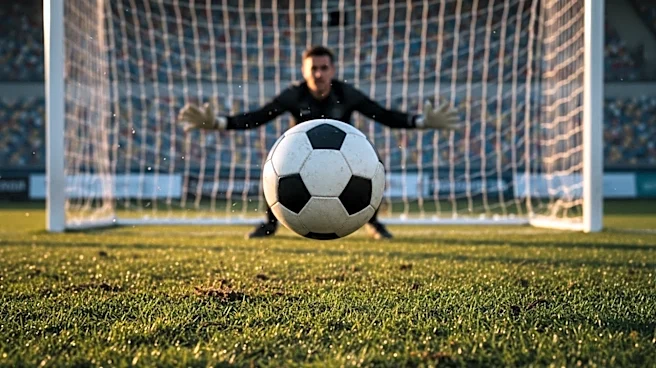
No one feels the pressure of a shootout more than the goalkeeper. They are, quite literally, the last line of defense. For a goalie, the shootout is a lonely vigil. Yet, they are never truly alone. Their performance is deeply connected to the trust their teammates have placed in them. A goalie who feels the unshakeable confidence of their squad is more likely to play with the relaxed focus needed to make a save. Psychologically, the odds are stacked against them; they aren’t expected to save every shot. But a team that rallies around its keeper, celebrating a save with the same energy as a goal, transforms the keeper’s role from one of passive hope to active heroism. This collective belief can empower a goalie to make the one or two crucial saves that decide the outcome, turning a test of individual skill into a testament of shared resolve.
The Long Walk as a Litmus Test
The long walk from the center circle to the penalty spot is where a player’s—and by extension, a team’s—trust is laid bare. It is a solitary journey into a cauldron of pressure. Studies on player behavior during this walk are revealing. Players who rush the process, looking away from the keeper and hurrying their shot, tend to miss more often. This is often a subconscious attempt to escape the overwhelming stress. In contrast, players who walk deliberately, control their breathing, and maintain a steady gaze exude confidence. That confidence isn't just internal; it's often a reflection of the team's culture. A player from a trusting, supportive team is better equipped to handle that walk, knowing they have the full backing of their teammates, win or lose. The isolation of the walk is an illusion; they are carrying the entire team's hopes with them, and a strong team makes that burden feel lighter.