




The First 'Good'
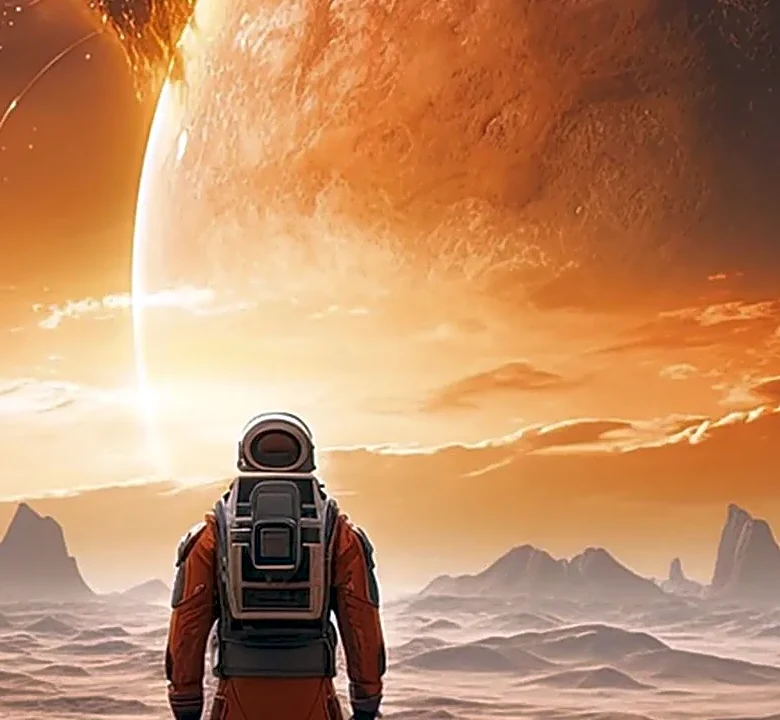
To understand the phrase, you have to go back to one of the most remarkable first-contact scenes in modern science fiction. Protagonist Ryland Grace, a science teacher who wakes up with amnesia on a desperate mission to save Earth, discovers he’s not
alone. His neighbor is an alien from a nearby star system facing the same existential threat. Grace nicknames the five-legged, rock-like, blind creature “Rocky.” Their initial attempts at communication are a tense but brilliant sequence of scientific deduction. Separated by a wall, they use mathematics and atomic masses to build a shared vocabulary. The very first word they successfully establish is “Good.” Grace asks a question, Rocky gives the correct answer, and Grace confirms it: “Good.” It’s a breakthrough, the first flicker of understanding between two completely different forms of life. That single word is the foundation of everything that follows.
From a Word to a Friendship
The phrase evolves as their partnership deepens. Rocky, whose species communicates with musical chords, quickly learns Grace's language. His speech patterns are unique, and he often repeats words for emphasis. A single “Good” becomes “Good good good,” a triumphant, joyous exclamation that punctuates their successful experiments and shared discoveries. It’s often paired with a fist bump against the glass partition that separates them, a gesture that transcends the vast biological differences between a human and a spider-like being made of rock. This phrase becomes the unofficial slogan of their two-man (well, one-man, one-Eridian) mission. It’s the sound of progress, the anthem of their unlikely but profound friendship that becomes the literal heart of the story.
A Symbol of Hope and Optimism
In a genre often defined by dystopia, alien invasions, and grim warnings, Project Hail Mary is refreshingly optimistic. It’s a story about problem-solving, intelligence, and the power of cooperation. “Good good good” is the perfect encapsulation of that spirit. It’s a mantra of positivity in the face of impossible odds. While Grace and Rocky are trying to save both of their species from extinction, their interactions are filled with humor, curiosity, and genuine affection. The phrase isn’t just about a successful experiment; it’s about the joy of discovery and the belief that even the most catastrophic problems can be solved with enough ingenuity and teamwork. For fans, it represents the hopeful core of the book, a welcome contrast to sci-fi’s darker tendencies.
The Fandom's Secret Handshake
Like all the best parts of nerd culture, “Good good good” has jumped off the page and into the real world. Fans use it on social media, in book reviews, and on Reddit threads to signal their shared love for the story. You can find fan-made merchandise, from t-shirts to coffee mugs, emblazoned with the phrase. It’s an inside joke that’s also a heartfelt tribute. Saying “Good good good” is a way of acknowledging the book’s emotional impact—the awe of discovery, the humor of Rocky’s unique personality, and the moving sacrifices made for friendship. It’s a testament to Andy Weir’s ability to create a character in Rocky who, despite being a non-humanoid alien, has become one of the most beloved figures in recent fiction.