




The Hall H Pressure Cooker
First, you have to understand the stakes. Hall H is the main stage of San Diego Comic-Con, a 6,500-seat auditorium where Hollywood's biggest studios come to win over the most important audience in fandom. For decades, this is where casts have been revealed,
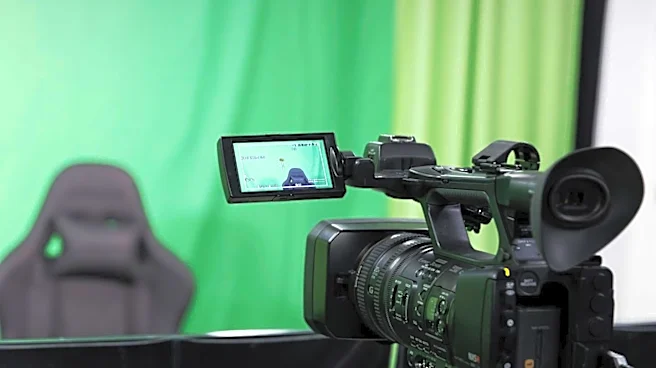
legendary trailers have debuted, and the initial buzz for massive franchises is born. Getting into the room often requires fans to camp out overnight. The energy is electric, and the expectations are astronomical. In this environment, you can't just show up with a half-baked product. You have to sell the dream. But when your billion-dollar movie is still in production, with actors performing in front of green screens, the dream is very, very unfinished.
The Problem with 'Raw' Footage
Imagine seeing your favorite superhero not soaring through the sky, but dangling from wires in a gray motion-capture suit, surrounded by a sea of green. Or a dramatic monster reveal that’s just a guy holding a tennis ball on a stick. That's often the reality of raw footage for a visual effects-heavy film. Showing this to a hyped-up crowd would be disastrous, instantly killing the magic and making a potential blockbuster look cheap and silly. The challenge for cinematographers and VFX supervisors is to bridge the massive gap between what they’ve filmed and the final, polished spectacle the audience will eventually see in theaters. They need to present the feeling of the finished film, even when the pixels aren't all there yet.
The 'Trick' Unveiled: Pre-Vis and Post-Vis
The solution isn't one single trick but a sophisticated process, primarily involving pre-visualization (pre-vis) and post-visualization (post-vis). Pre-vis happens before shooting even begins; it's a process of creating rough, often 3D-animated versions of scenes to plan camera angles, action choreography, and timing. Think of it as a detailed, moving storyboard that establishes the director's vision. Post-vis is where the real magic for Hall H happens. After the live-action plates are shot, artists take the raw footage—green screens and all—and quickly composite rough, unfinished digital elements into the frame. An untextured, gray-scaled dragon might be dropped in, or a simple wireframe model of a spaceship. It's not pretty, but it communicates scale, movement, and intent. This allows the editor to cut a sequence that feels cohesive and exciting, giving the audience a clear and compelling idea of the final product without waiting for months of detailed rendering.
Sound, Editing, and Selling the Vision
Post-vis is only part of the equation. To truly sell the footage, editors and sound designers work overtime. A powerful score, explosive sound effects, and carefully selected dialogue can do much of the heavy lifting, directing the audience’s emotions and filling in the blanks left by the incomplete visuals. Editing is also key. A skillfully cut trailer will linger on finished or nearly-finished shots, use quick cuts to obscure the roughest parts, and build a rhythm that makes the entire piece feel more complete than it actually is. It's a calculated performance. Studios like Marvel have become masters of this, famously presenting footage from films like Avengers: Infinity War a full year before release, knowing that the combination of star power, temporary effects, and an ecstatic crowd is enough to guarantee a standing ovation and a year's worth of positive buzz.