


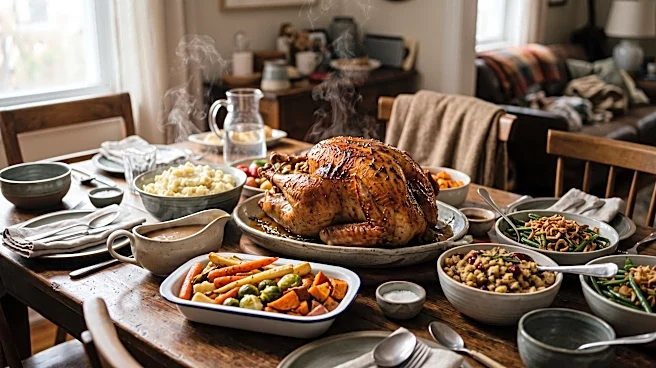
Every family has its fault lines, but they never seem more likely to crack than at Thanksgiving. Stephen Karam’s Tony-winning play, 'The Humans,' masterfully puts this anxiety on stage, using one family dinner to hold a mirror to our own.
The Setting Is a Character
Forget a warm,
inviting home. The Blake family gathers for Thanksgiving in Brigid and her boyfriend Richard's new apartment, a pre-war, two-story duplex in Manhattan's Chinatown. And it's falling apart. The lights flicker, unsettling noises bang from other units, and the window looks out onto a grim interior courtyard. The apartment itself is a central character, its physical decay and claustrophobic feel mirroring the family's internal state. It’s a literal pressure cooker: the walls feel like they’re closing in, and the strange sounds from outside add a layer of external dread to the simmering internal resentments. This isn't the cozy, nostalgic setting of a typical holiday. It's a place of transition and uncertainty, reflecting the precarious state of a family that feels it's losing its footing.
Simmering Financial and Health Anxieties
The small talk over turkey is laced with the very real fears that plague the modern American middle class. Patriarch Erik and his wife Deirdre are struggling financially after decades of hard work. They've sacrificed to give their daughters a better life, but now face a future with a dwindling pension and rising healthcare costs for Erik's mother, Momo, who has Alzheimer's. The daughters, Aimee and Brigid, carry their own burdens. Aimee, a lawyer, is dealing with a serious intestinal illness that threatens her career and has just been dumped by her long-term girlfriend. Brigid, a musician, is saddled with student debt and the frustration of trying to launch a creative career in an expensive city. Each character is hiding a private crisis, and the forced festivity of the holiday only makes their individual isolation feel more acute.
The Unspoken and the Unsettling
Much of the play’s tension comes not from explosive arguments, but from what's left unsaid. For much of the dinner, the biggest secrets fester beneath the surface. Erik hasn't told his daughters that he was fired from his job of 28 years after having an affair, losing his pension and torpedoing his family's financial security. Deirdre copes with the betrayal and her own insecurities about aging through passive-aggressive comments and a forced cheerfulness. The generational divide is a constant hum; the parents don't understand their daughters' life choices, and the daughters resent their parents' judgment. The play brilliantly captures how families can wound each other with polite questions and well-meaning advice that lands like a criticism. The real drama is in the silences, the quick changes of subject, and the things everyone knows but refuses to acknowledge.
A Mirror to the American Dream's Decay
Ultimately, 'The Humans' resonates because the Blake family’s anxieties are not just their own; they are a microcosm of a national unease. The play, first written in the shadow of the 2008 financial crisis, taps into a deep-seated fear that the American Dream is broken. Erik and Deirdre followed the rules, but their security is gone. Their daughters, despite their college educations, are facing even greater precarity. The play explores themes of economic instability, the fear of aging and illness, and the loss of faith. It asks a terrifying question: what happens when a family does everything 'right' and still ends up falling apart? The 'monsters' in the play aren't supernatural; they are poverty, loneliness, and the fear that love isn't enough to save you.