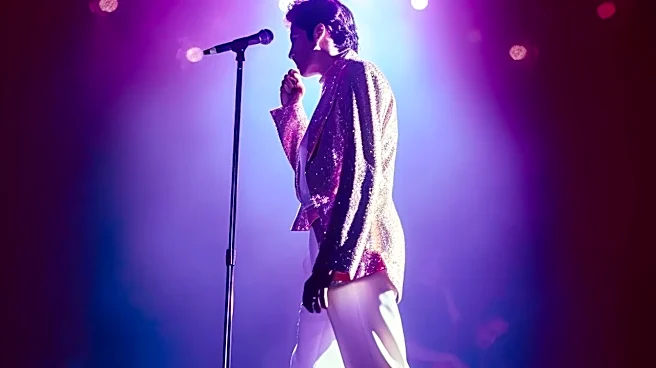






Think of any great musical era, and a sound comes to mind. But just as powerful is the image. Fashion is more than an accessory to the music; it’s the visual language that gives a cultural movement its uniform and cements its place in history.
More Than Just a Costume
Before you
hear a single note, you see the artist. That visual first impression—whether it’s a leather jacket, a sequined jumpsuit, or a thrift-store flannel—is a powerful form of communication. For musicians, clothing is a narrative tool. It telegraphs the ethos of their music: rebellion, glamour, angst, or joy. But its role extends far beyond the stage. When fans adopt an artist's style, it transforms from a personal statement into a collective identity. That shared aesthetic builds a tribe, creating a visible bond among strangers who are connected by the same soundtrack. It’s the reason why a musical era feels like a complete world, with its own sound, attitude, and, most importantly, its own look.
The Shock of the New: Glam Rock's Alien Messenger
Few artists demonstrate the power of fashion better than David Bowie. In the early 1970s, he introduced the world to Ziggy Stardust, an androgynous, alien rock star with fiery red hair and otherworldly costumes. This wasn't just a gimmick; it was a perfect visual representation of glam rock's boundary-pushing sound. Bowie, in collaboration with designers like Kansai Yamamoto, crafted a persona that was flamboyant, sexually ambiguous, and utterly new. The look was so impactful that magazines soon ran features on how to create your own Ziggy Stardust outfits. For fans, dressing like Ziggy was a way to opt into his world of rebellion against dreary norms, making the music a form of personal transformation.
The Uniform of a Generation: Grunge's Anti-Fashion
Sometimes, the most influential fashion statement is a rejection of fashion itself. The grunge movement of the early 1990s, emerging from the rain-soaked Pacific Northwest, was a direct backlash against the polished excess of the 80s. Bands like Nirvana, Pearl Jam, and Soundgarden channeled a sense of disillusionment, and their clothing reflected it. Kurt Cobain’s uniform of ripped jeans, oversized cardigans, and flannel shirts wasn't a calculated costume but an authentic extension of his environment and ethos. This 'anti-fashion' look was quickly adopted by a generation of fans who felt alienated by mainstream consumerism. It became a visual shorthand for the genre's raw, unfiltered sound, proving that even a deliberate lack of polish can become an iconic style.
Pop Mastery and Mass Identity
In the 1980s, Madonna became a master of using fashion to build a global pop empire. Her early look—a mix of lace, crucifixes, rubber bracelets, and 'Boy Toy' belts—was a masterclass in provocative branding. It was accessible, easily emulated, and perfectly matched the rebellious energy of hits like 'Like a Virgin'. Department stores like Macy's even opened 'Madonnaland' sections to sell her signature looks to legions of 'wannabe' fans. By turning her style into a DIY kit for her audience, Madonna didn't just sell records; she created a movement. Her fans weren't just listening to her music; they were wearing her attitude, making her aesthetic the defining look of 80s pop.
The Modern Heirs
The tradition continues with contemporary artists who use fashion to shape their narratives. Billie Eilish's early adoption of baggy, oversized streetwear was a deliberate choice to divert focus from her body and center her genre-bending music. Her style communicated a sense of privacy and authenticity that resonated with a generation growing up online. Similarly, Harry Styles channels the showmanship of icons like Bowie and Prince, using gender-fluid fashion—frills, pearls, and bold suits—to complement his classic rock and pop sound. His concerts have become fashion events in their own right, with fans dressing up in feather boas and sequins to participate in the experience. For these artists, as for the legends before them, fashion isn't an afterthought. It's the story you see.