






The Loneliest Job in Sports
In the run of play, a goalkeeper’s job is a strange mix of brief, violent panic and long stretches of isolated observation. They might touch the ball only a dozen times in a match. They are part of the team, but fundamentally separate, clad in a different
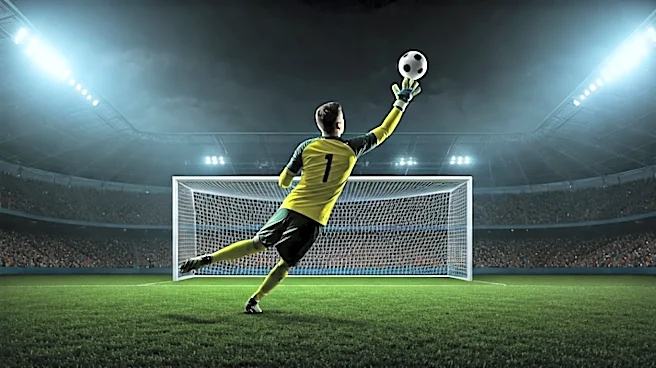
color, governed by different rules. Their mistakes are magnified, their heroics often fleeting. They are the designated defender, the last line, a role that is inherently reactive. But the penalty shootout flips this entire dynamic on its head. It’s no longer a team sport. It is a series of stark, one-on-one duels. The field melts away, the other 20 players become helpless spectators, and the global broadcast narrows its focus to two individuals: the penalty taker and the goalkeeper. For these few, excruciating minutes, the keeper is no longer reacting to the game; they are at the dead center of it. The entire weight of a nation’s hopes, a club’s legacy, or a championship trophy settles directly onto their shoulders.
A Masterclass in Mind Games
The beauty and cruelty of the shootout lie in its psychological asymmetry. The penalty taker is *expected* to score. From 12 yards out, against a stationary ball, the odds are overwhelmingly in their favor. The pressure is on them not to fail. For the goalkeeper, the script is reversed. No one truly expects them to make a save. The goal is a massive target, and they have milliseconds to react. Every save is a bonus, a stolen moment of glory.
This is where the game becomes theater. Freed from the burden of expectation, the keeper can become the aggressor. They dance on the line, point to one side, and whisper provocations, doing anything to crawl inside the kicker’s head. Argentina's Emiliano Martínez is a modern master of this dark art, his antics during the 2022 World Cup becoming the stuff of legend. He doesn’t just try to save the ball; he tries to dismantle the shooter’s confidence before the ball is even kicked. It’s a battle of nerve, not just reflexes, and the keeper is the only one with nothing to lose.
From Afterthought to Architect of History
A striker can score a hat trick and still lose. A midfielder can dominate the game and go home empty-handed. But a goalkeeper who wins a shootout becomes an instant, undisputed hero. Their performance is immortalized. Think of Morocco’s Yassine Bounou in 2022, standing tall against Spain, his two saves making him a national icon and carrying an entire continent’s dreams forward. His performance wasn’t just a few good saves; it was the narrative climax of a historic World Cup run.
Conversely, the keeper is the silent witness to legendary failure. When Italy’s Roberto Baggio skied his penalty in the 1994 World Cup final, the enduring image is not just of Baggio’s despair, but of Brazilian keeper Cláudio Taffarel raising his arms to the heavens, the victor who won by simply standing still. In the shootout, the goalkeeper doesn’t just participate in history; they frame it.
Why We Can't Look Away
For an American audience accustomed to the constant action of basketball or the strategic chess of football, the slow, agonizing build-up of a shootout can feel alien. But its appeal is universal. It strips a complex, flowing game down to its most primal element: a direct test of will under unbearable pressure. You don't need to understand the offside rule or tactical formations to feel the tension.
Will he guess right? Will the kicker crack? It’s pure human drama, playing out in real-time. The goalkeeper, for so long on the periphery, becomes the protagonist of a story with only two possible endings: triumph or despair. They are the final plot twist, the character upon which the entire story hinges. And in that moment, it’s impossible to look anywhere else.