





Wearable Sculpture in an Art-Saturated World
To understand the rise of the collector-level cuff, you first have to understand the environment. Art Basel isn't just a trade show; it's the Super Bowl of the art world—a visually overwhelming, socially charged arena. In a place where every wall is screaming
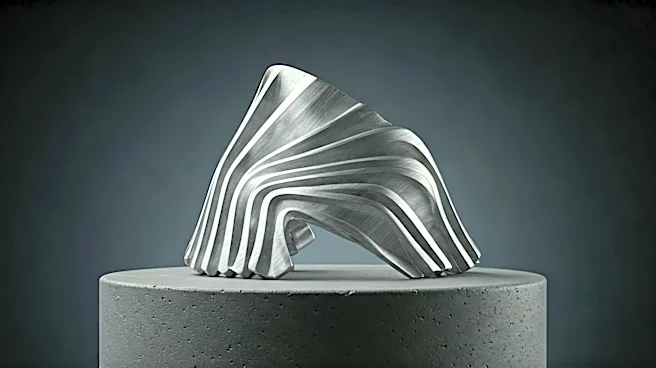
for attention, what you wear becomes a strategic act of communication. An oversized cuff, particularly one with a sculptural, almost architectural quality, does more than just accessorize an outfit. It functions as a piece of personal art. It’s a bold, three-dimensional form that holds its own against a backdrop of Basquiats and Rothkos. Unlike a delicate necklace or a subtle ring, a substantial cuff has presence and weight. It carves out space on the wearer’s wrist, mirroring the way a powerful sculpture commands a gallery floor.
The Enduring Ghost of Elsa Peretti
You can't talk about substantial cuffs without paying homage to the original master: Elsa Peretti. Her iconic Bone Cuff, designed for Tiffany & Co. in the 1970s, is the spiritual blueprint for the modern statement piece. Peretti wasn’t just making jewelry; she was sculpting for the human form. The Bone Cuff was ergonomic, sensual, and fundamentally powerful—a piece of silver that felt both primal and impossibly chic. Today's resurgence isn't just a revival of a single design but an embrace of its ethos. Designers from Schiaparelli to Saint Laurent are creating pieces that share its DNA: they are confident, unapologetic, and blur the line between jewelry and object. Owning one feels less like following a trend and more like acquiring a piece of design history, a wearable testament to a certain kind of strength.
A Maximalist Rejection of Quiet Luxury
For the past few years, the dominant fashion narrative has been “quiet luxury” or “stealth wealth”—a minimalist aesthetic defined by understated, logo-free, and often beige investment pieces. The oversized cuff is a direct, metallic rebuttal to that entire philosophy. It’s loud, but not in a tacky way. It’s a confident declaration of taste that doesn't need to whisper. Where quiet luxury sought to blend in, the statement cuff is about standing out with intention. It suggests that the wearer is past the need for subtlety and is ready to embrace a more expressive, maximalist form of personal style. At a venue like Art Basel, where fortunes are made and displayed, this shift is particularly potent. It signals a move away from hiding wealth and toward celebrating bold, artistic expression in all its forms.
The Ultimate Form of Power Armor
Beyond aesthetics, there's a psychology at play. The art world is notoriously hierarchical and can be intimidating. A significant piece of jewelry can function as a kind of armor. It’s a non-verbal cue that says, “I belong here.” Think of the classic image of a Wonder Woman-style cuff deflecting a blow; there’s an inherent sense of power and protection. In a social context, it projects confidence and steadies the hand, whether you’re shaking hands on a deal, gesturing to make a point, or holding a glass of champagne. It’s a focal point that draws the eye and anchors a look, giving the wearer an air of self-possession. It's not about brand names, but about the heft and history it signifies, making it the perfect power play for the art world's elite.