



The Invention of the Teenager
Before World War II, you were a child, and then you were a small adult. The concept of the “teenager”—a distinct demographic with its own culture, tastes, and, crucially, spending power—was largely a 1950s invention. Post-war prosperity meant that for the first
time, young people didn’t have to rush into the workforce to support their families. They had allowances, part-time jobs, and something entirely new: leisure time. This economic freedom created a powerful new consumer market. And what did this market want? It wanted things that belonged to them, not their parents. Music, movies, and, most visibly, fashion became the tools through which this new generation began to define itself. The clothes they wore weren't just for covering up; they were declarations of independence, signaling who they were and, more importantly, who they weren't.
Choosing a Side: Ivy League vs. The Rebel
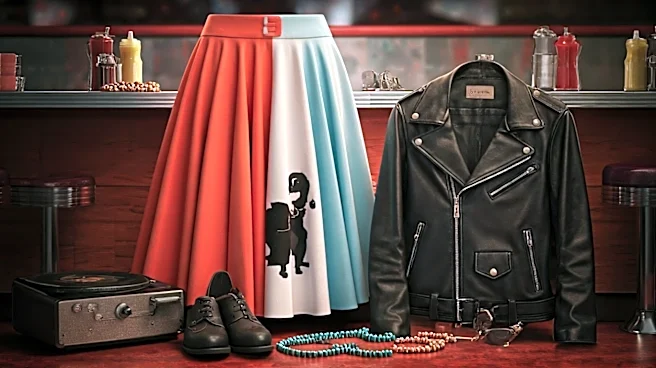
This new teen identity quickly fractured into distinct tribes, primarily defined by style. On one side was the clean-cut, collegiate “Ivy League” look. It was the uniform of the aspiring mainstream: button-down shirts, sharp chino pants, letterman sweaters, and saddle shoes. This was the look of conformity, yes, but it was a *youthful* conformity, separate from the gray flannel suits of their fathers. On the other side was the “Greaser” or the rebel, a look directly inspired by the brooding anti-heroes of the silver screen like Marlon Brando in *The Wild One* and James Dean in *Rebel Without a Cause*. The uniform was simple, potent, and a direct challenge to suburban propriety: tight white t-shirts, cuffed blue jeans, and the all-important leather jacket. It was a costume that broadcasted a simmering disdain for the rules, making it thrilling for those who wore it and terrifying to the adult world.
The Blueprint in Blue Jeans
Of all the garments to emerge from this era, the most revolutionary was the simple pair of blue jeans. Previously seen as durable workwear for miners and laborers, denim was co-opted by the rebels of the 50s and transformed into a symbol. To wear jeans was to align yourself with a kind of rugged, working-class authenticity and to reject the crisp, pressed perfection of the establishment. Many schools banned them, which only supercharged their appeal. This act of appropriation was the quiet genius of 50s teen fashion. By taking a piece of clothing and infusing it with new, rebellious meaning, they created a blueprint that would be followed for decades. The hippies of the 60s would take the greasers' defiant denim and cover it in patches and embroidery. The punks of the 70s would rip it and hold it together with safety pins. The grunge kids of the 90s would wear it torn and faded. It all started with the 50s teen deciding a work pant could be a statement.
More Than Clothes: A Cultural Template
Ultimately, the most profound legacy of 1950s teen fashion wasn’t the poodle skirt or the penny loafer. It was the establishment of a template for how youth culture operates. The 50s were the first time fashion was used on a mass scale by young people to build a world entirely separate from their parents. This formula has been repeating ever since. Every subculture, from mod and hippie to punk and hip-hop, has relied on a distinct visual style to signal belonging and differentiate itself from the mainstream. The idea that your clothes, your music, and your attitude are all part of a single, cohesive identity package was road-tested in the American high schools of the 1950s. The styles may look dated to us now, but the underlying impulse—the need to use what you wear to tell the world who you are—is as potent as ever.