
Technique 1: Master the Textural Contrast
The single most important secret to pairing navy and black is making it look intentional, not like you got dressed in the dark. The easiest way to signal intent is through texture. When the two colors
are rendered in flat, similar fabrics (like two pieces of cotton), they can bleed into one another and look muddy. The men at Pitti Uomo avoid this by creating clear visual separation. Imagine a chunky navy wool knit sweater worn under a sleek black leather jacket. Or a dark navy corduroy blazer paired with black denim. The different ways these materials catch the light—the matte finish of wool versus the sheen of leather, the ridges of corduroy versus the flat weave of twill—create a sophisticated contrast that allows each color to stand on its own while still complementing the other. Think of it as a conversation between fabrics; if they’re both saying the same thing, it’s boring. If they offer different perspectives, it becomes interesting.
Technique 2: Use a 'Buffer' Color
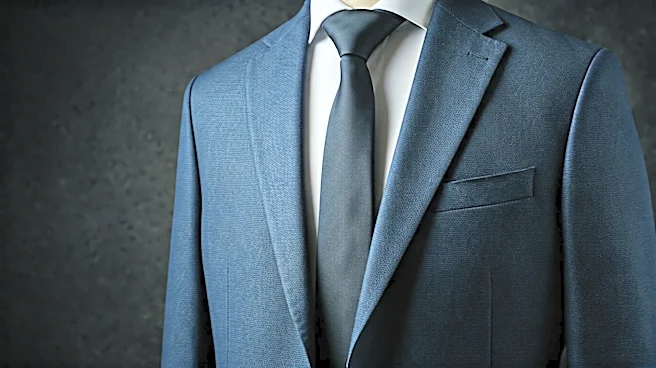
When you’re staring at a navy blazer and black trousers and feeling uncertain, the problem isn’t the core pairing—it’s the lack of a mediator. Introducing a third, lighter color acts as a buffer zone, breaking up the two dark shades and adding a necessary point of light to the outfit. The most classic buffer is a crisp white shirt. It’s a clean, can’t-miss move that brightens the entire look and frames your face. You’ll see this constantly in Florence: a navy suit with a black knit tie becomes instantly wearable with a white shirt underneath. But it doesn’t have to be white. A light gray t-shirt, a cream-colored turtleneck, or even a strategically deployed pocket square in a brighter hue can serve the same purpose. This simple addition makes the combination feel less like a fashion risk and more like a deliberate, layered, and confident choice.
Technique 3: Go All-In on a Sleek Silhouette
While texture adds dimension, you can also go the opposite direction by embracing a minimalist, tonal approach. This works best when both the navy and black pieces are dark, sharp, and part of a clean, modern silhouette. Think of a very dark navy, almost-black topcoat worn over a simple black crewneck sweater and slim black trousers. Here, the colors are so close that they create a single, elongated, and elegant line. The key is tailoring. The garments must fit impeccably. This isn’t a look for slouchy, casual pieces. It’s for sharp, architectural clothing where the subtle shift from black to deep navy is a quiet, confident flex for those who are paying attention. It communicates a mastery of color theory, suggesting that you know the “rule” so well that you know exactly how to break it with precision.
Technique 4: Let One Color Dominate
An easy way to avoid the dreaded “mismatch” effect is to establish a clear hierarchy in your outfit. Instead of having a 50/50 split between navy and black, let one color be the foundation and the other serve as a strategic accent. A common and effective combination seen at Pitti is an all-black ensemble—black jeans, black sweater, black boots—with a single, statement-making navy overcoat. The navy coat becomes the hero piece, standing out beautifully against the monochrome canvas. The reverse also works: a sharp navy suit can be anchored with black leather accessories like a sleek belt and polished oxford shoes. By making one color the clear star of the show, you eliminate any ambiguity. It’s not a question of whether the colors “go together”; it’s a demonstration of how one powerful color can be used to enhance another.
Technique 5: Lean on a Pattern
If mixing solid navy and solid black still feels intimidating, let a pattern do the heavy lifting for you. A navy and black pattern, such as a check, plaid, or stripe, inherently validates the color combination. For example, a sport coat with a navy and black houndstooth or Prince of Wales check is an effortless way to wear the two colors together. You can then pull the solid colors from the pattern to build the rest of your outfit. Wear that patterned jacket over a solid black merino wool polo and with solid navy trousers. The pattern acts as the binding agent, explicitly telling the world that these two colors are meant to be together. It's a sartorial cheat code, one that the old guard of menswear has been using for years and the Pitti crowd has perfected for the modern age.