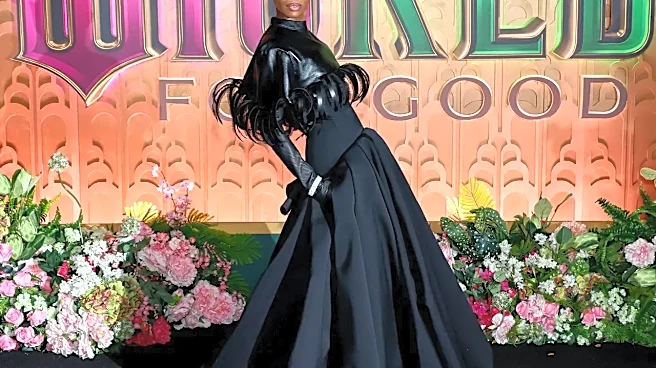







With the cinematic conclusion 'Wicked: For Good' on the horizon, the story's deep-seated conflicts are more resonant than ever. To truly understand the tragedy of Glinda and Elphaba, you only need to look at two powerhouse Act II solos.
Glinda's Gilded Cage: 'Thank Goodness'
On the surface,
'Thank Goodness' is a pageant. Glinda, now 'Glinda the Good' and the public face of the Wizard's regime, presides over a celebration announcing her engagement to Fiyero. The Ozians cheer, the sun is out, and everything is sparkling. But underneath the pageantry, the song is an exercise in profound self-deception. As she performs for the crowd, Glinda's inner monologue reveals a woman trapped by the very success she craved. 'Happy is what happens when all your dreams come true, well, isn't it?' she asks, the final question hanging in the air with devastating uncertainty. She has the fame, the adoration, and the fiancé, but she has lost her only true friend and compromised her own morality to get there. The song masterfully contrasts her bright, public soprano with lower, more conflicted phrases where she admits to the 'sort of a cost' of her choices. It’s not a victory lap; it's the sound of a woman convincing herself that the beautiful cage she's built is actually a home.
Elphaba's Breaking Point: 'No Good Deed'
If 'Thank Goodness' is about faking happiness, 'No Good Deed' is about embracing misery. This is Elphaba at her absolute nadir. Believing Fiyero is dead and that Glinda has betrayed her, and having seen every one of her attempts to do good warp into a catastrophe, she finally snaps. The very title says it all: 'No good deed goes unpunished'. The song is a furious, volcanic eruption of grief and rage. For the entire story, Elphaba has fought against the narrative that she is 'wicked'. She tried to save the Animals, she tried to expose the Wizard, she tried to rescue her sister. Now, with everything lost, she decides to stop fighting. 'All right, enough, so be it,' she declares, 'Let all Oz be agreed, I'm wicked through and through'. It is a moment of horrific surrender. She is not becoming a villain; she is accepting the label the world has forced upon her because the effort of proving them wrong has become too painful to bear. It’s the tragic climax of a character who realizes her good intentions are worthless in a world determined to misunderstand her.
Two Sides of a Corrupted Coin
Played back-to-back, 'Thank Goodness' and 'No Good Deed' form a perfect, tragic diptych of the musical's central theme: the crushing weight of public perception. Both Glinda and Elphaba find themselves isolated and forced into roles they didn't truly choose. Glinda gains the whole world but loses her soul, forced to be the smiling mascot for a corrupt government. Elphaba loses everything and everyone, and in her despair, she tragically accepts the monstrous identity Oz has created for her. Glinda's song is about the lie of being 'good,' while Elphaba's is about the lie of being 'wicked.' Neither character is what they appear to be to the citizens of Oz. They are both victims of a political machine that requires a pretty figurehead and a terrifying scapegoat. These songs expose the truth: Glinda's 'goodness' is a performance built on compromise, and Elphaba's 'wickedness' is a shield forged from pain.
From Stage to the Silver Screen
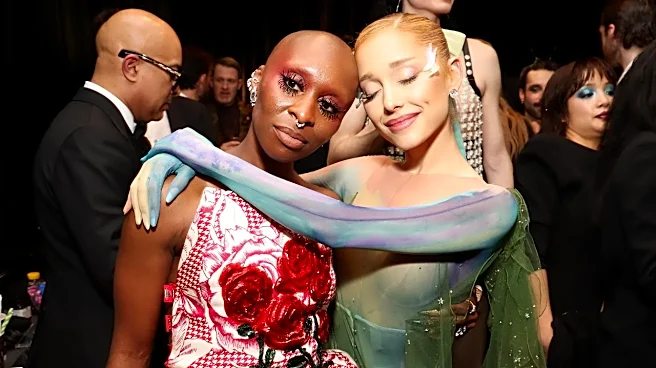
The anticipation for how these numbers will be handled in 'Wicked: For Good' is immense. With Ariana Grande as Glinda and Cynthia Erivo as Elphaba, the vocal power is undeniable. Grande, a lifelong fan of the show who has spoken about her deep connection to the role, has the challenge of conveying Glinda’s inner turmoil while maintaining a flawless public facade. Erivo, for her part, has discussed the loneliness of filming 'No Good Deed,' a song that requires a raw, solitary descent into despair. The cinematic medium offers a unique opportunity for these moments. Directors can use close-ups and visual storytelling to amplify the internal conflict that the stage can only suggest. The success of the film's second half will arguably rest on its ability to capture the devastating emotional honesty of these two iconic, and fundamentally misunderstood, heroines.