







The Human Shield Fallacy
On paper, there’s safety in numbers. Your primal brain, however, doesn’t quite agree. When you walk into a haunted house with a group, you’re not just a single target; you’re part of a chaotic, flailing organism. Every member of your squad becomes both
a potential buffer and a liability. You might try to strategically place your bravest friend in front, but that plan dissolves the moment a scare-actor with a chainsaw (chain removed, of course) lunges from the shadows. Suddenly, it’s a free-for-all. This dynamic actually heightens the tension. You aren’t just managing your own fear; you’re anticipating the reactions of everyone around you. Your friend’s sudden gasp becomes your trigger, their frantic grab at your arm a signal of imminent doom. The group doesn’t form a protective bubble; it creates a web of shared anxiety where every vibration spells danger.
Fear Is Contagious, and So Are the Screams
Fear is a social contagion. Psychologists note that when we experience a threat, our bodies are flooded with hormones like adrenaline that prime our 'fight-or-flight' response. In a group setting, this effect multiplies. One person shrieks, which startles the person behind them, who then bumps into the next, creating a domino effect of pure, unadulterated panic. You’re not just reacting to the monster in the corner; you’re reacting to your friend’s reaction to the monster. This feedback loop makes the entire experience far more intense than a solo trip ever could be. Alone, you might jump and then quickly rationalize the threat away. With friends, a single jump scare can echo through the group for a solid ten seconds, evolving from a solo fright into a symphony of collective terror.
From Terror to Comedy in Half a Second
Herein lies the central magic of the group experience. The same mechanism that amplifies the fear is what makes it hilarious. Studies on fear and humor show that laughter often follows a jump scare almost immediately. It’s a release valve, the brain’s way of rapidly re-contextualizing a perceived threat as benign. When you’re with friends, this transition is instantaneous and communal. The guttural scream of the friend who claimed they “don’t get scared” is terrifying for one moment and side-splittingly funny the next. You get to witness the ridiculous, unguarded terror on your friends' faces, the clumsy trip over a fake prop, or the person who recoils in fear from an inanimate coat rack. These moments of absurdity break the tension and turn the house from a horror film into a horror-comedy, where you are both the audience and the cast.
Your Squad Has Unspoken Roles
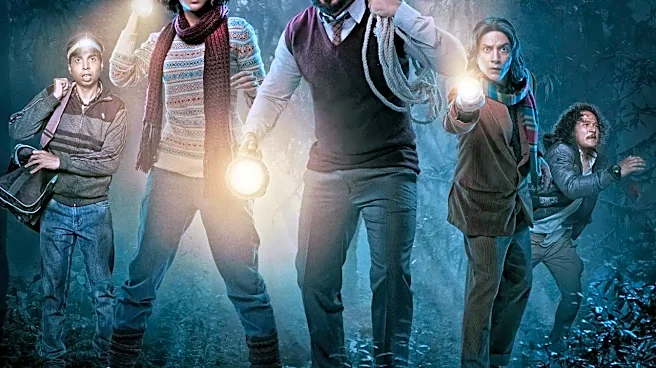
Every group that enters a haunted house instinctively assigns roles. There’s ‘The Sacrificial Leader,’ the one pushed to the front to absorb the first wave of scares. There’s ‘The Screamer,’ whose high-pitched wails serve as the group’s official alarm system. You’ll also find ‘The Human Turtle,’ who spends the entire time with their head buried in someone’s back, and ‘The Stoic,’ who walks through with an unnerving calm, making everyone else feel jumpier by comparison. Finally, there's ‘The Commentator,’ who nervously narrates everything, pointing out obvious hiding spots and trying to make small talk with the ghouls. Recognizing these roles in your own friend group is part of the fun. This shared social dynamic turns the maze into a team-building exercise gone horribly, hilariously wrong, strengthening bonds through shared screams and laughter.