






An Icon Before a Franchise
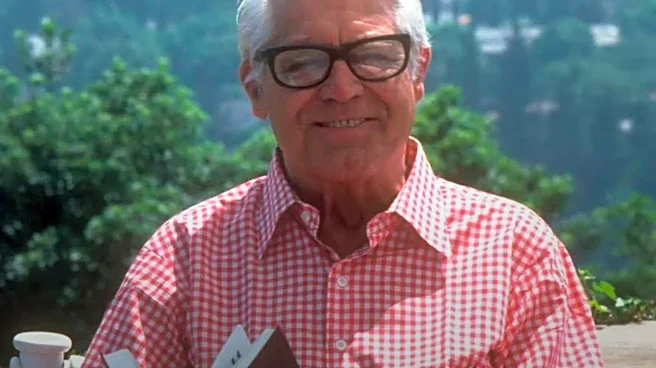
Before movie universes and multi-film contracts became the norm, there was Cary Grant. For over three decades, he was the definition of a movie star—charming, sophisticated, and reliably brilliant. Unlike actors today who are often tied to a single, career-defining
character, Grant built his brand on being singularly himself. His decision-making process was famously independent; after his initial contract with Paramount ended in 1936, he became one of the first major stars to work as a freelancer, giving him unprecedented control over his roles. This autonomy allowed him to cultivate a specific persona, one he was fiercely protective of. It also set the stage for a series of rejections that have become as much a part of his legend as the films he actually made.
The James Bond Proposition
Perhaps the most famous role Grant ever turned down was James Bond. He was, by all accounts, the prototype. Ian Fleming was reportedly inspired by Grant's performance as a suave agent in Alfred Hitchcock's "Notorious." Bond producer Albert "Cubby" Broccoli was a close friend—Grant was even the best man at his wedding—and considered him a natural choice for 007. However, two issues stood in the way. First, at 58 years old when "Dr. No" was being cast, Grant felt he was too old to begin a long-running series. He was willing to do one film, but Broccoli and his partner Harry Saltzman wanted an actor who could commit to a franchise. Second, Grant's superstar salary would have eaten up a huge portion of the film's budget. The role, of course, went to Sean Connery, launching one of cinema's most durable franchises and making Connery an international star. Grant, meanwhile, continued being Cary Grant.
The Hitchcock Sequels That Weren't
Alfred Hitchcock and Cary Grant made four films together, creating some of the most memorable thrillers in history, including "To Catch a Thief" and "North by Northwest." The latter, with its tale of mistaken identity and cross-country espionage, is often cited as a direct precursor to the Bond films. Given their success, Hitchcock was keen to continue the partnership. The director reportedly wanted Grant for a modern-dress version of "Hamlet" and even considered him for a follow-up to "North by Northwest," though a direct sequel never materialized. Grant also turned down a sequel to the massively popular "Roman Holiday," in which he was the first choice for the male lead but declined, believing himself too old to star opposite Audrey Hepburn (a decision he reversed a decade later for "Charade"). Both Peck and Hepburn were later approached for a sequel that never got off the ground.
Guarding the Legacy
Grant’s reluctance wasn’t just about age. When he co-starred with Audrey Hepburn in the 1963 hit "Charade," he was acutely aware of their 25-year age gap and insisted the script make it clear that Hepburn's character was pursuing him, not the other way around. This sensitivity to his on-screen image was central to his career choices. He had no interest in playing older, grandfatherly types or fading into character roles. He understood that the "Cary Grant" persona had a sell-by date. His final film was 1966's "Walk, Don't Run." That same year, his daughter, Jennifer, was born. At 62, Grant retired from acting entirely to focus on being a father, a role he prioritized over any comeback. Studios continued to offer him parts for years, but he always declined, having already built a perfect, timeless career.