





The Original Roar: Fashion as Liberation
Before it was a costume, the fashion of the 1920s was a revolution. After the trauma of World War I and the victory of the women's suffrage movement, a new spirit of liberation took hold. Fashion was its most visible expression. Corsets were abandoned
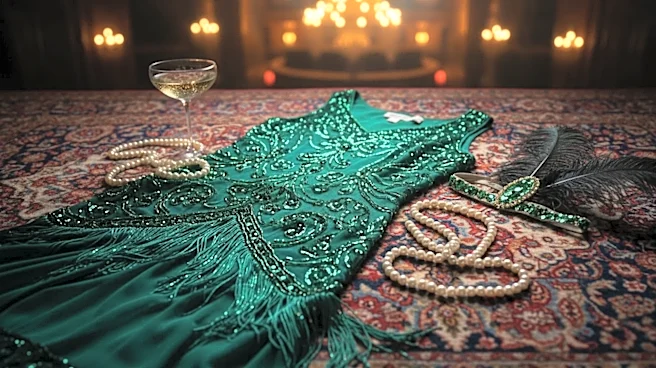
for simpler, looser silhouettes like the drop-waist dress, which allowed for unprecedented freedom of movement. Hemlines rose, hair was bobbed, and for the first time, fashion became accessible. The simple construction of the flapper dress made it easy for women of all economic backgrounds to create the look, democratizing style in a way that was previously unthinkable. This wasn't just about clothes; it was a cultural statement about independence, mobility, and a modern, forward-facing attitude.
The 1974 Revival: Glamour in a Time of Malaise
When Francis Ford Coppola's adaptation starring Robert Redford and Mia Farrow hit theaters in 1974, America was in a funk. The nation was grappling with the fallout from the Vietnam War, the Watergate scandal, and a sputtering economy plagued by an oil crisis and stagflation. A deep sense of national malaise had set in. Into this gloom stepped Gatsby. The film's lush, romanticized vision of the 1920s offered a potent form of escapism. Theoni V. Aldredge's Oscar-winning costume design, which blended 20s authenticity with a 70s sensibility, resonated deeply. Ralph Lauren, who designed the menswear including Redford's iconic pink suit, saw his brand skyrocket as Art Deco motifs and looser, more elegant silhouettes became a defining feature of 70s style. The revival wasn't just about liking the clothes; it was about a nation weary of cynicism and conflict, yearning for a fantasy of lost glamour and simpler, more opulent times.
The 2013 Effect: Opulence After the Crash
History repeated itself, albeit with a different flavor, in 2013. Baz Luhrmann's frenetic, visually saturated film arrived as the world was still climbing out of the 2008 financial crisis, the deepest recession since World War II. Unemployment had peaked, household wealth had taken a massive hit, and a general sense of economic anxiety lingered. Luhrmann's film, created in partnership with Prada, Miu Miu, and Brooks Brothers, was less a historical recreation and more a high-fashion fantasy. The costumes, while not strictly accurate, were designed to give a modern audience the feeling of the Roaring Twenties' excess. The result was an explosion of Gatsby-themed parties, runway collections, and a mainstream embrace of beaded headbands, drop-waist dresses, and three-piece suits. This time, the appeal was twofold: it was a chance to escape into a world of unbelievable wealth and spectacle, while also reflecting a cultural fascination with the very themes of new money, materialism, and class that the 2008 crisis had brought to the forefront.
The Secret Ingredient: The Allure of Beautiful Doom
So, what's the real reason? It isn't just about a great story or pretty clothes. The fashion of The Great Gatsby takes off when society finds itself in a moment of deep uncertainty, looking for a language to express both its anxieties and its desire for something more. The 1920s were a party on the edge of the Great Depression. The 1970s revival was a glamorous escape from political and economic turmoil. The 2010s revival was a decadent fantasy in the wake of financial collapse. The style represents a specific, potent cocktail: newfound freedom mixed with a sense of peril, boundless optimism underscored by tragedy. It’s the aesthetic of dancing as fast as you can, knowing that the party might end at any moment. That combination of beauty and danger is what makes it timeless, and why we keep returning to it whenever our own times feel a little too precarious.