


The Magic of the Mass Singalong
There's a specific magic that happens when thousands of people, once strangers, become a single, unified voice singing a beloved chorus. That feeling has a name: 'collective effervescence.' Coined by sociologist Émile Durkheim, it describes a shared moment
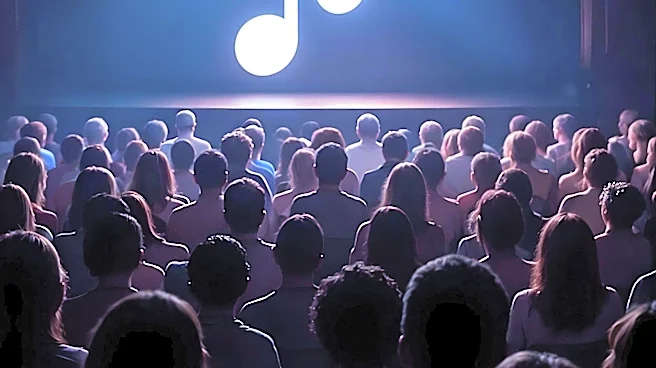
of intense connection and energy that transcends the everyday. In a dense crowd, this effect is amplified tenfold. The physical closeness, the shared focus, and the reverberation of thousands of voices create a powerful feedback loop. You feel the bass in your chest, but you also feel the joy of the person next to you. Each person’s excitement becomes your own, and yours becomes theirs. This is why a headliner's set, packed with fans who know every word, can feel like a quasi-religious experience. The density creates a human container for that collective energy, making the emotional peak higher and more memorable.
When More Is a Mess
But that same density can be the enemy of nuance. For a folk singer-songwriter or a technically intricate jazz trio, an overly packed crowd can be a disaster. The subtle details of the music get lost in the ambient noise and distraction of a tight space. Instead of collective effervescence, you get sensory overload. Your brain, busy processing the constant physical contact and lack of personal space, can’t fully engage with the performance. The feeling of being trapped or the low-grade anxiety of navigating a human sea can curdle excitement into irritation. Furthermore, extreme crowding introduces rudeness and friction. People pushing through, talking loudly, or accidentally spilling drinks can completely sever the fragile connection between a more intimate artist and their audience. In these moments, density doesn't unite; it divides the experience into a thousand tiny annoyances.
The Artist-Audience Feedback Loop
It’s not just about how the crowd feels; it's about what the artist sees. Performers feed off audience energy. A sprawling, dense sea of engaged faces sends a clear signal: we are with you. This can inspire an artist to deliver a more energetic, passionate, and memorable performance. You can see it when a musician leans into the front rows or takes a moment to absorb the scale of the audience. A sparse crowd, on the other hand, can be deflating for both the artist and the fans who did show up. It can make a set feel less significant, creating a self-fulfilling prophecy of low energy. The perceived success or failure of a set is often visually measured by the density of its audience, which in turn affects the emotional commitment from everyone involved, from the front row to the person on stage.
Finding Your Festival Sweet Spot
Ultimately, the 'right' crowd density is a strategic choice, not a given. Your position in Zilker Park is an act of curating your own emotional journey. Do you want the primal, unifying roar of the main stage during the final act of the night? Push forward and embrace the crush. Are you there to appreciate the intricate guitar work of an indie darling on a side stage? Hang back, find a pocket of space, and give the music room to breathe. The festival experience isn't one-size-fits-all. Thinking about crowd density as a tool allows you to be intentional. You can choose total immersion for one set and comfortable observation for the next. The art of attending a festival is learning how to navigate the human geography to find the precise spot where the music, the crowd, and your own desires perfectly align.