







From Afterthought to Obsession
For decades, set pieces—corner kicks and free kicks—were treated as a lottery ticket. Coaches would have players practice crossing the ball and heading it, but the prevailing attitude was one of hope over strategy. Teams might have one or two basic routines,
but the final minutes of practice were hardly the place for intricate choreography. That era is over. The modern game, driven by analytics and razor-thin margins, has turned set pieces into a new frontier for tactical innovation. A single goal from a corner can be the difference between advancing to the knockout stages or going home, and coaches have realized that leaving these opportunities to chance is a form of malpractice.
Enter the Set-Piece Coordinator
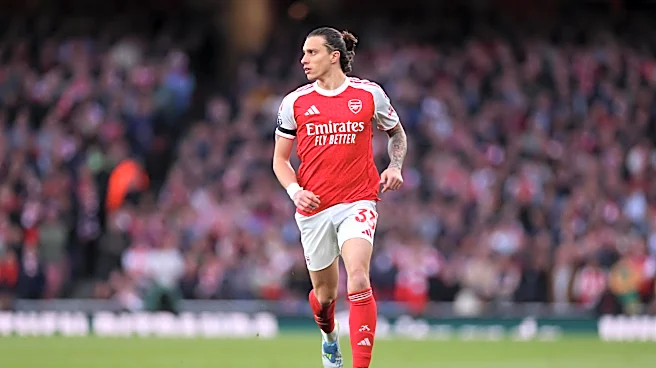
The most telling sign of this shift is the rise of a new job title: the set-piece coach. Think of this person as soccer’s version of an NFL offensive or defensive coordinator. Their sole focus is designing and drilling dead-ball situations. Coaches like Italy’s Gianni Vio, nicknamed the “set-piece guru,” and Arsenal’s Nicolas Jover have become minor celebrities in the tactical world. They arrive at a club with a literal playbook—a binder or tablet filled with dozens of unique plays designed to exploit specific defensive setups. Just as an NFL team scripts its first 15 offensive plays, these coaches script their responses to every kind of dead-ball scenario, turning a moment of stoppage into a huge tactical advantage.
The Gridiron on the Grass
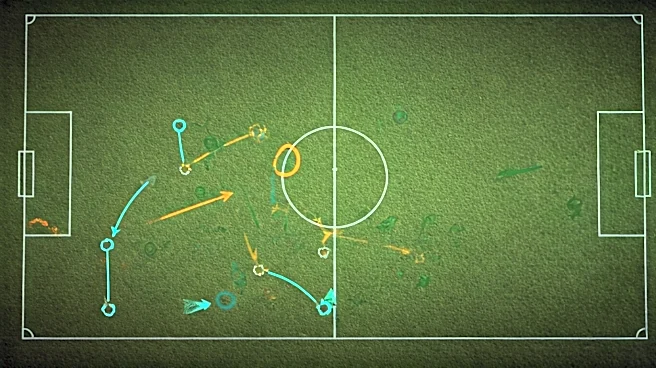
This is where the comparison to American football becomes startlingly literal. The core concepts are the same: create space for your best player and disrupt the defense’s structure. Soccer coaches now use NFL-style “blocking” schemes, where a big defender doesn’t attack the ball but instead legally obstructs an opponent, clearing a path for the intended goal-scorer. It’s the soccer equivalent of an offensive lineman sealing off a linebacker to spring a running back. We see “decoy” runs everywhere. A player will make a hard run to the near post, drawing two or three defenders with him, only for the ball to be delivered to the now-vacant space he just left. It’s a post route designed to clear out the safety. Players even form “stacks” or “trains” before a corner, breaking in different directions at the snap—or in this case, the kick—to create confusion, exactly like receivers running complex route combinations.
Analytics and the Art of the Goal
Behind every clever on-field routine is a mountain of data. Analysts study hours of film to find a team’s defensive weaknesses. Do they leave the back post unguarded? Is their goalkeeper reluctant to leave his line? Do they struggle when the ball is delivered low and fast instead of high and looping? This data is the foundation of the playbook. A set-piece coach will see that an opponent’s defenders are all focused on the ball, not the players around them. So, he’ll design a play with a “screen,” where one of his players stands directly in front of the goalkeeper, blocking his vision until the last second. It’s a tactic straight out of basketball or hockey, but it’s fueled by the same analytical rigor that tells an NFL coach to target a specific cornerback on third-and-long. The goal is to create a high-percentage shot in a situation that used to be a coin flip.