






The Problem with On-Screen Anger
For years, live-action adaptations have struggled with Kara Zor-El’s anger. The long-running CW series *Supergirl* gave us a compassionate, optimistic hero whose fury was typically a temporary state, a plot device to be overcome before returning to a sunnier
baseline. It was often treated as a flaw, something to be managed or suppressed. Other portrayals, like her brief but brutal appearance in *The Flash*, swung the other way, presenting a raw, almost feral warrior. While compelling, it offered little room for nuance, reducing her to a blunt instrument of vengeance. The core challenge is that Kara isn't just Superman with a different haircut. He was sent to Earth as an infant, an immigrant who grew into his new world. She was a teenager who watched her planet, her family, and her entire civilization die before being trapped in suspended animation. Her rage isn't a bug; it's a feature—a righteous, terrifying, and deeply human response to cosmic trauma. Making that anger feel earned and complex, rather than just a simple “berserker mode,” has been the genre’s unsolved puzzle.
The 'Woman of Tomorrow' Solution
The blueprint for solving this problem already exists. Tom King and Bilquis Evely’s 2022 comic book series, *Supergirl: Woman of Tomorrow*—the very source material for James Gunn’s upcoming DCU film—masterfully navigates Kara’s psychology. The story finds a 21-year-old Kara adrift, drinking her way through her own birthday on a backwater planet. She’s not the bubbly hero of Metropolis; she’s a jaded survivor grappling with the fact that she has saved her adopted world countless times but can never reclaim her own. Into her life comes Ruthye, a young alien girl from a medieval-tech society seeking vengeance for her father’s murder. When a bounty hunter poisons Kara’s beloved dog, Krypto, the two join forces on a galaxy-spanning quest for justice. Throughout the journey, King’s writing never shies away from the deep well of fury inside Kara. It’s a quiet, simmering anger that explodes in moments of shocking violence, but it’s always framed as the righteous fury of someone who has lost everything and refuses to let others suffer the same fate.
The One Crucial Production Choice
The genius of *Woman of Tomorrow* isn't just its plot, but its perspective. The entire story is narrated by an elderly Ruthye, looking back on the adventure that defined her life. We don’t get Kara’s internal monologue. We see Supergirl through the eyes of a young, awestruck girl who witnesses both her boundless compassion and her terrifying power. This is the single production choice that the film must adopt: tell the story from Ruthye’s point of view. By framing Supergirl as the subject of another character’s story, the filmmakers can achieve what has so far been impossible. We can witness Kara’s rage without being trapped inside it. Ruthye’s narration provides the context, the emotional filter that makes Kara’s actions understandable. When Supergirl unleashes her power, we see it as Ruthye does: with a mix of awe, fear, and profound respect. The film becomes a character study by observation, not by confession.
Why This Narrative Frame Works
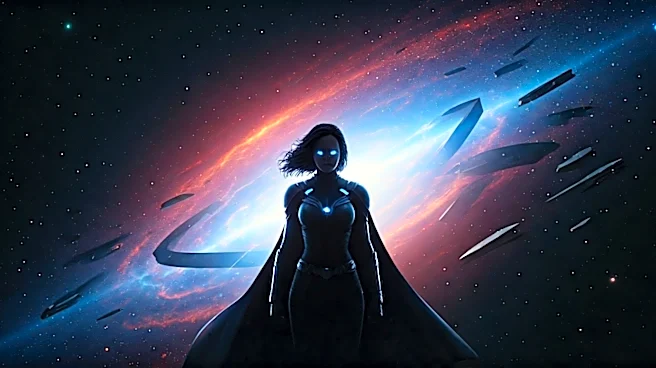
Using an external narrator makes Supergirl feel mythic. Her rage isn't just an emotion; it’s a force of nature, like a storm seen from a safe distance. Ruthye’s voice can describe the change in the air when Kara gets angry, the way villains tremble, the sheer, world-breaking power held back by a thread of empathy. This approach allows the film to show, not tell. We don’t need Kara to say, “I’m angry because I lost Krypton.” We see her annihilate a fleet of ships to protect one innocent girl, and Ruthye’s narration tells us everything we need to know about the righteous fire fueling the attack. This filter makes her rage multifaceted. To Ruthye, Kara’s anger is inspiring. To her enemies, it is the last thing they will ever see. To the audience, it becomes a complex and defining part of a hero who is simultaneously a god and a deeply wounded person. It allows her to be both aspirational and terrifying, sidestepping the one-note trap entirely.