
The Weight of the Four Stars
To understand the shock of Italy’s decline, you have to appreciate the heights from which they fell. This isn’t just any team; this is soccer royalty. Their legacy is built on four World Cup victories
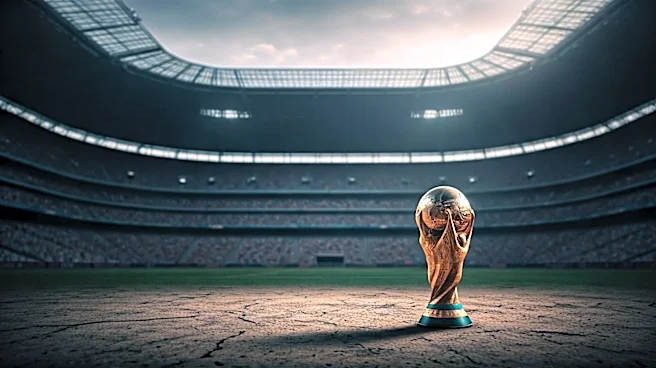
(1934, 1938, 1982, 2006), a record bettered only by Brazil. American fans who tuned in for the 2006 final remember it vividly: the drama of Zinedine Zidane’s headbutt, the tension of the penalty shootout, and the unbridled joy of Fabio Cannavaro hoisting the solid gold trophy. That team, with legends like Andrea Pirlo, Gianluigi Buffon, and Francesco Totti, embodied Italian soccer: defensively impenetrable, tactically brilliant, and ruthlessly efficient. The four stars on their chest aren't just decoration; they're a constant reminder of an almost impossibly high standard.
The First Shockwave: Missing Russia 2018
For 60 years, a World Cup without Italy was unthinkable. Then came November 2017. In a tense, two-legged playoff against Sweden, the Azzurri failed to score a single goal, losing 1-0 on aggregate. The image of a tearful Buffon, the last remaining link to the 2006 champions, apologizing to the nation after the final whistle at Milan's San Siro stadium became a symbol of national failure. It was supposed to be a historic anomaly, a once-in-a-generation disaster. The blame was laid on an aging squad and a conservative coach. The assumption across the soccer world was that Italy would learn its lesson, rebuild, and come back stronger. It was a wake-up call, but as it turned out, Italy just hit the snooze button.
A False Dawn: The Euro 2020 Miracle
And then, in a stunning reversal of fortune, they did come back stronger. Under new manager Roberto Mancini, a stylish and attack-minded Italy went on a world-record 37-game unbeaten streak. They played with flair, joy, and a swagger that had been missing for years. In the summer of 2021, they stormed through the European Championship, defeating England in a dramatic penalty shootout in the final at Wembley Stadium. It was a glorious, unexpected redemption. Mancini was a hero. The team was celebrated for its resilience. It felt like the 2018 nightmare had been exorcised and the natural order of soccer was restored. Italy was back. Or so it seemed.
The Unthinkable Sequel: The Qatar Catastrophe
The hangover from the Euro 2020 party proved fatal. Just eight months after being crowned champions of Europe, Italy’s World Cup qualification campaign faltered. A few key draws meant they were once again cast into the do-or-die playoff bracket. Their opponent wasn't a powerhouse like Portugal or the Netherlands; it was North Macedonia, a tiny nation ranked 67th in the world. What happened next was, somehow, even more shocking than the 2018 failure. In a home match in Palermo, Italy dominated possession but couldn't score. Then, in the 92nd minute, a long-shot prayer from the visitors found the back of the net. Italy lost 1-0. European champions one year, eliminated by a massive underdog the next. It wasn't a fluke anymore; it was a pattern. The country was in a state of collective disbelief.
So, What's the Real Problem?
The blame can't be placed on one single factor. It's a systemic failure. For years, experts have warned that Italy's domestic league, Serie A, has prioritized aging, foreign stars over developing young Italian talent. Unlike Germany or France, who overhauled their youth systems decades ago, Italy rested on its laurels. This has led to a critical shortage of top-tier Italian players, especially elite goal-scorers. The country that produced attacking legends like Roberto Baggio and Alessandro Del Piero suddenly couldn't find a reliable striker. This, combined with a psychological fragility that seems to emerge during World Cup qualifiers, created the perfect storm for a historic collapse.