







1. Pick a Team for No Good Reason
Seriously. The easiest way to have a stake in the game is to have a team. But you don't need a legitimate reason. In fact, the less legitimate, the better. Did you have a great layover in Lisbon once? You're a Portugal fan now. Do you think the Netherlands'
orange jerseys are unbelievably cool? Welcome to the Oranje. Does your friend's insufferable brother-in-law love Argentina? Guess you're rooting for Brazil. Announce your arbitrary choice with confidence. It gives you a built-in conversational starting point ('My guys are looking a little shaky today') and an immediate emotional connection that’s 100% authentic to you, even if it has nothing to do with the offside rule.
2. Master the Art of the Question
This is the golden rule. People who love soccer *love* to explain it. Your job isn't to have answers; it's to ask the right questions. This makes you seem curious and engaged, not ignorant. Instead of staring blankly, try one of these all-purpose gems: * 'So, is this a must-win game for them?' (Instantly gets at the stakes.) * 'Who's the player we should be watching on this team?' (Shows you're interested in the key figures.) * 'That looked like a big call. Was that the right decision?' (Lets the expert in the room rant about the referee, a time-honored tradition.) * 'How are we feeling about our chances in the next round?' (Forward-looking and optimistic.) You're not pretending to know; you're actively learning in a way that fuels the conversation for everyone else.
3. Follow the Human Drama, Not the Tactics
Forget formations and defensive strategies. A soccer tournament is just a high-stakes, unscripted reality show. There are heroes, villains, and redemption arcs everywhere. Find one. Is there an aging superstar (think Lionel Messi in 2022) on their last quest for the one trophy that's eluded them? Is there a tiny nation that's shockingly good, playing the role of the plucky underdog? Did a star player get injured, forcing an unknown backup into the spotlight? These are the stories that make sports great, and they require zero technical knowledge to appreciate. Frame your comments around the narrative: 'I feel for the guy, that's a tough way to end his tournament' or 'You have to love a Cinderella story like this.'
4. Understand the Tournament in Two Sentences
You don't need a wall chart. All you need to know is this: The tournament starts with a 'Group Stage' where teams play a few games in a mini-league. Then, the best teams advance to the 'Knockout Stage.' That's it. That’s the whole structure. The Group Stage is about survival; the Knockout Stage is where every game is win-or-go-home. This simple context helps you understand the stakes. A loss in the Group Stage might not be the end of the world. A loss in the Knockout Stage is devastating. Knowing this difference is 90% of the battle.
5. Focus on the 'Big' Moments
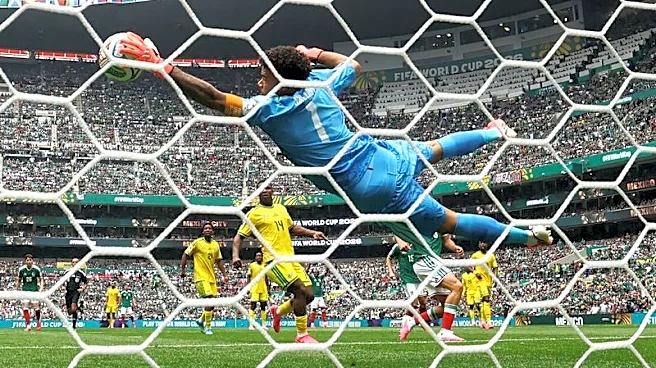
You don't need to understand the subtle genius of a midfielder controlling the game's tempo. But you can absolutely react to the obvious, universal moments of high drama. A goal from 30 yards out? A goalkeeper making a miraculous, acrobatic save? A player missing a penalty kick that would have won the game? These are moments of pure, visceral emotion. React to them! A simple 'Wow!', 'What a hit!', or a groan of shared despair is a perfect contribution. These are the emotional peaks and valleys that fans live for, and your genuine, human reaction is a form of participation. You're sharing the feeling, and that's what being a fan is all about.