









First, What Defines the 'LeBron Type'?
Before we find his soccer equivalent, we have to define the blueprint. LeBron James isn’t just one of basketball's all-time greats; he's a physical and tactical anomaly. At 6'9" and roughly 250 pounds, he possesses the power of a tank but moves with uncanny
speed and grace. But his defining trait is his versatility. He's a "point forward"—a player with the size of a forward who acts as the primary ball-handler and playmaker, controlling the offense with elite court vision. This blend of freakish athleticism, high basketball IQ, positional flexibility, and off-court gravitational pull makes him a unique archetype in sports.
The Physical Marvel: Speed and Power Combined
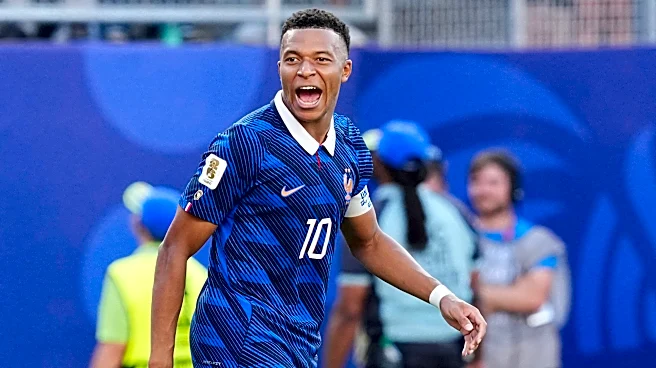
On the soccer pitch, a purely physical player is common. A purely technical one is, too. But the 'LeBron Type' merges both. The most direct translation is an attacker who combines brute strength with explosive speed. Think of France’s Kylian Mbappé. He possesses a terrifying combination of raw acceleration and strength that allows him to blow past defenders, yet he maintains delicate control of the ball at top speed. Like LeBron driving to the hoop, when Mbappé gets a head of steam, he seems unstoppable. His ability to use his physical gifts to exploit defensive lines forces opponents to completely alter their shape, creating space for his entire team to operate—a hallmark of a physically dominant, high-IQ player.
The 'Point Forward' on Grass
The tactical core of the LeBron archetype is playing a position that doesn't traditionally exist. In soccer, this translates to an attacker who is both a primary goal scorer and a primary creator. England’s captain, Harry Kane, has evolved into a perfect example. Once a traditional striker, Kane now frequently drops deep into the midfield—much like a point forward—to collect the ball and orchestrate attacks. He uses his exceptional passing range to launch wingers into space, effectively acting as a playmaker from a forward position. This hybrid role, a 'false 9' with the vision of a number 10, allows him to be a lethal goal threat while simultaneously creating chances for others, making him a complete offensive hub.
The All-Action Engine: Covering the Entire Field
Another key aspect of LeBron's game is his sheer impact on every facet of play—scoring, assisting, and defending. In soccer, this is the domain of the modern box-to-box midfielder, and England's Jude Bellingham has become the quintessential example. He seems to be everywhere at once: making crunching tackles on defense, driving the ball through the heart of the field, and arriving in the box to score crucial goals. This relentless energy and ability to contribute in every phase of play is rare. Bellingham’s versatility allows him to play almost anywhere in the midfield, adapting his role based on what the team needs moment to moment, much like LeBron adjusts his game to exploit any weakness.
More Than an Athlete: The Global Icon
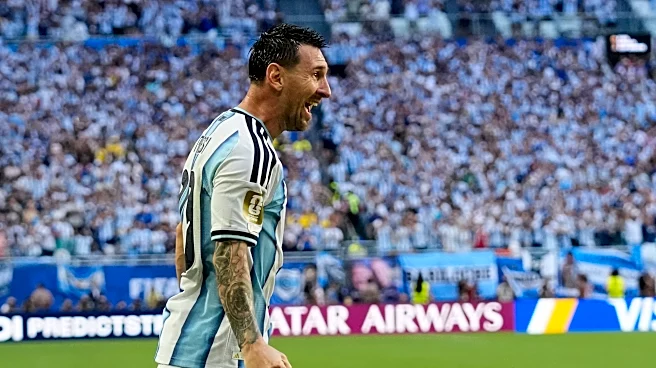
Finally, the 'LeBron Type' transcends the game itself. He is a team leader, a global brand, and a voice. For years, this space was dominated by Lionel Messi and Cristiano Ronaldo, whose influence is legendary. But looking at the current generation lighting up the 2026 World Cup, Kylian Mbappé embodies this status. He is the face of the French national team, a global fashion and marketing icon, and a player whose words carry weight. His journey from a prodigious teenager to a global superstar serves as an inspiration and defines him as a cultural force, not just a phenomenal player on the pitch.