







More Than Just Bins
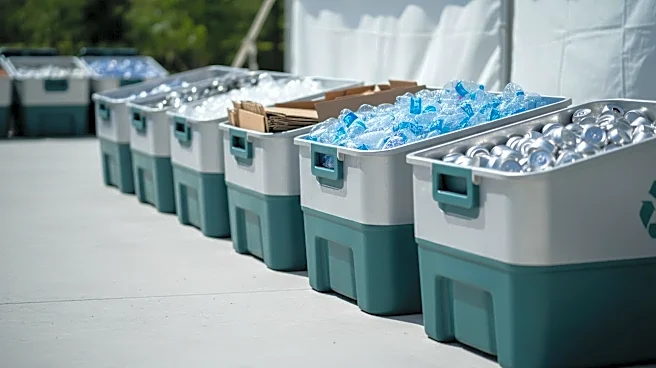
To the casual observer, waste management at Outside Lands might look like any other large event: a sea of bins for trash, recycling, and compost. But that’s just the tip of the iceberg. Since its inception, the festival has partnered with Clean Vibes,
a company dedicated to responsible event waste management, to build a system that goes far beyond simple collection. Every food and beverage item sold is intentionally sourced to be fully compostable, from the paper cups and bamboo plates to the utensils. This decision is the foundation of the entire program, ensuring that the vast majority of what attendees discard can be diverted from a landfill before it’s even thrown away. It’s a proactive strategy that designs waste out of the system from the start.
The Unseen Army of Sorters
The real magic happens behind the scenes, powered by a small army of volunteers. Hundreds of people, known as the Clean Vibes crew or “Trash Talkers,” work in exchange for a festival ticket. Many are stationed at waste collection points, actively educating fans on how to sort their refuse correctly. But their most crucial work happens after the crowds go home. Each night, and after the festival concludes, crews sweep the 80-acre grounds of Golden Gate Park. Everything is transported to a central, on-site sorting facility—a place attendees never see. Here, volunteers meticulously hand-sort every bag to correct for errors, ensuring that compostables are free of plastics and recyclables are clean. This human touch is what allows the festival to achieve one of the highest waste diversion rates of any major U.S. festival, hitting 89% in 2025.
From Festival Grounds to Farmland
So where does it all go? The sorted materials embark on a new journey. In 2025 alone, over 330,000 pounds of waste were kept out of landfills. This included more than 122,000 pounds of compostable material—food scraps, cups, and plates—that were processed and eventually used as nutrient-rich soil amendment for local farms. Over 200,000 pounds of other materials were recycled or reused, including cardboard, cooking oil, and even textiles from lost and found. The festival also partners with the nonprofit Extra Food to collect surplus edible food from vendors each night, distributing it to Bay Area communities facing food insecurity. This “closed-loop” thinking extends to power, with the festival increasingly using solar and renewable diesel, and to water, with free refill stations that prevent the use of single-use plastic bottles.
Designed to Be Ignored
The fact that most of the 225,000 attendees never notice this complex ballet of sustainability is, in a way, the entire point. The system is designed to be seamless. By making all serviceware compostable and placing sorting stations everywhere, the festival makes it easy for fans to do the right thing without having to think too much about it. The convenience allows the focus to remain on the music, art, and food. While some might see a missed opportunity for more visible education, organizers have bet that successful environmental action at this scale relies on making sustainability the path of least resistance. The result is a cleaner park and a model for how massive cultural events can dramatically shrink their environmental footprint, whether the audience is watching or not.