






The Dust is Public Enemy Number One
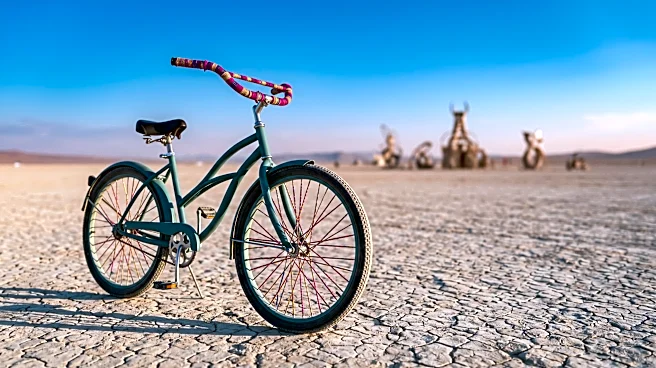
The biggest challenge on the playa isn’t the heat; it’s the dust. This isn’t ordinary sand. It’s an extremely fine, alkaline powder that gets into everything. For lighting equipment, it’s a nightmare. The dust clogs cooling fans, leading to overheating.
It coats lenses, dimming a powerful beam into a dull glow. Worst of all, its corrosive properties can short-circuit sensitive electronics. Professional designers don't just bring their standard touring gear; they bring a modified arsenal. Many fixtures are housed in custom-built, weather-sealed enclosures. Clear acrylic boxes, sometimes with their own filtered fans, become essential armor. Some designers opt for IP65-rated fixtures, which are certified as dust-tight and water-resistant, but even these often get an extra layer of protection. Simple, low-tech solutions are also key: covering speakers and mixers with tapestries or heavy blankets and wrapping sensitive connections in plastic can make the difference between a working installation and a pile of expensive junk.
Painting on a Canvas of Pure Black
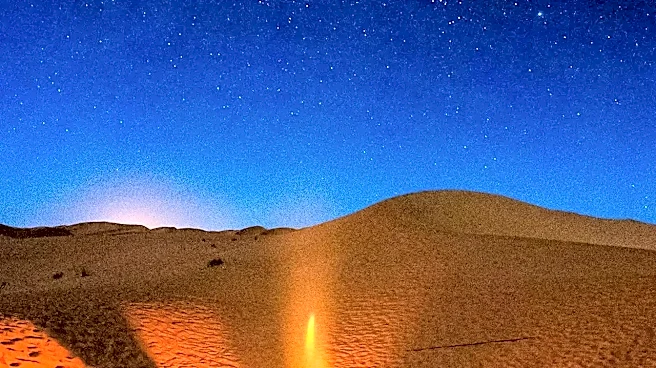
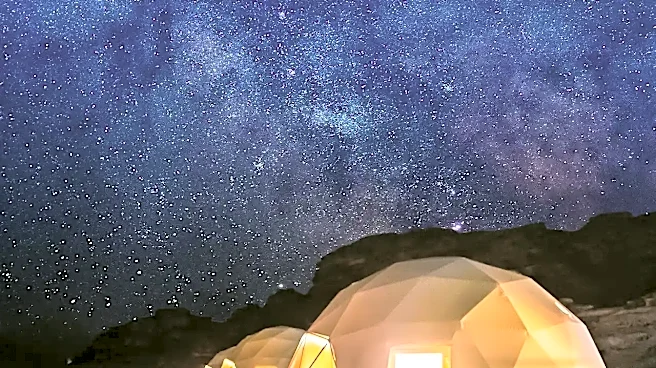
The darkness of the open playa is absolute, a feature that is both a challenge and a massive opportunity. There is no ambient light pollution, meaning every single photon comes from an artist's installation or a passing Mutant Vehicle. The primary rule is safety: an installation must be visible from at least 150 feet to prevent collisions. This requires 360-degree illumination, ensuring there are no dangerous dark spots where someone could trip over rebar or a guy-wire. Beyond safety, the goal is artistry. Designers use the darkness as a canvas. This involves a delicate balance. Large-scale pieces might use powerful LED arrays to be seen from across the playa, while others create intimate spaces with subtle, diffused light. LEDs are heavily favored over options like EL wire, which is often too dim to compete with the scale of the desert and gets easily obscured by dust. The goal isn't just to be bright, but to create mood, shape, and an experience that can only exist in this unique, pitch-black environment.
The Unforgiving Realities of Power
In Black Rock City, there are no wall outlets. Every watt of power must be generated on-site. For years, this meant a heavy reliance on gas and diesel generators, which are noisy, smelly, and require constant refueling. Today, while generators are still common, there's a significant push toward more sustainable and practical solutions. Propane generators are often preferred as they burn cleaner and reduce the risk of toxic fuel spills on the delicate playa. Increasingly, artists are turning to solar power. Large battery banks are charged during the intense desert day to power the light shows through the 10-plus hours of darkness. This shift isn't just environmental; it’s practical. Solar is silent, eliminating the constant hum of a generator and allowing for a more immersive artistic experience. Power management is a critical part of the design process, with designers carefully calculating the draw of every LED to ensure their creations don't go dark before sunrise.
Control in a State of Chaos
Creating a complex, synchronized light show is hard enough in a concert hall. Doing it in the middle of a desert with an unpredictable radio environment is another level of difficulty. Miles of physical data cables are impractical, so designers rely heavily on wireless DMX (the standard protocol for controlling stage lighting). This requires robust transmitters and receivers that can cut through the noise of countless other wireless signals. Many designers pre-program their entire shows, loading them onto ruggedized laptops or dedicated controllers that can run automatically. For interactive pieces that react to participants, the challenge is even greater. This can involve custom software and a network of sensors that must be both sensitive and durable enough to survive a week of dust and human interaction. As one artist put it, if a team member can handle the playa, they're robust enough for anything—and the same is true for their technology. The most successful projects are often those that are tested and assembled as much as possible before ever reaching the desert.